DJI Air 3S vs Mini 5 Pro in Canada: When Bigger Still Makes Sense
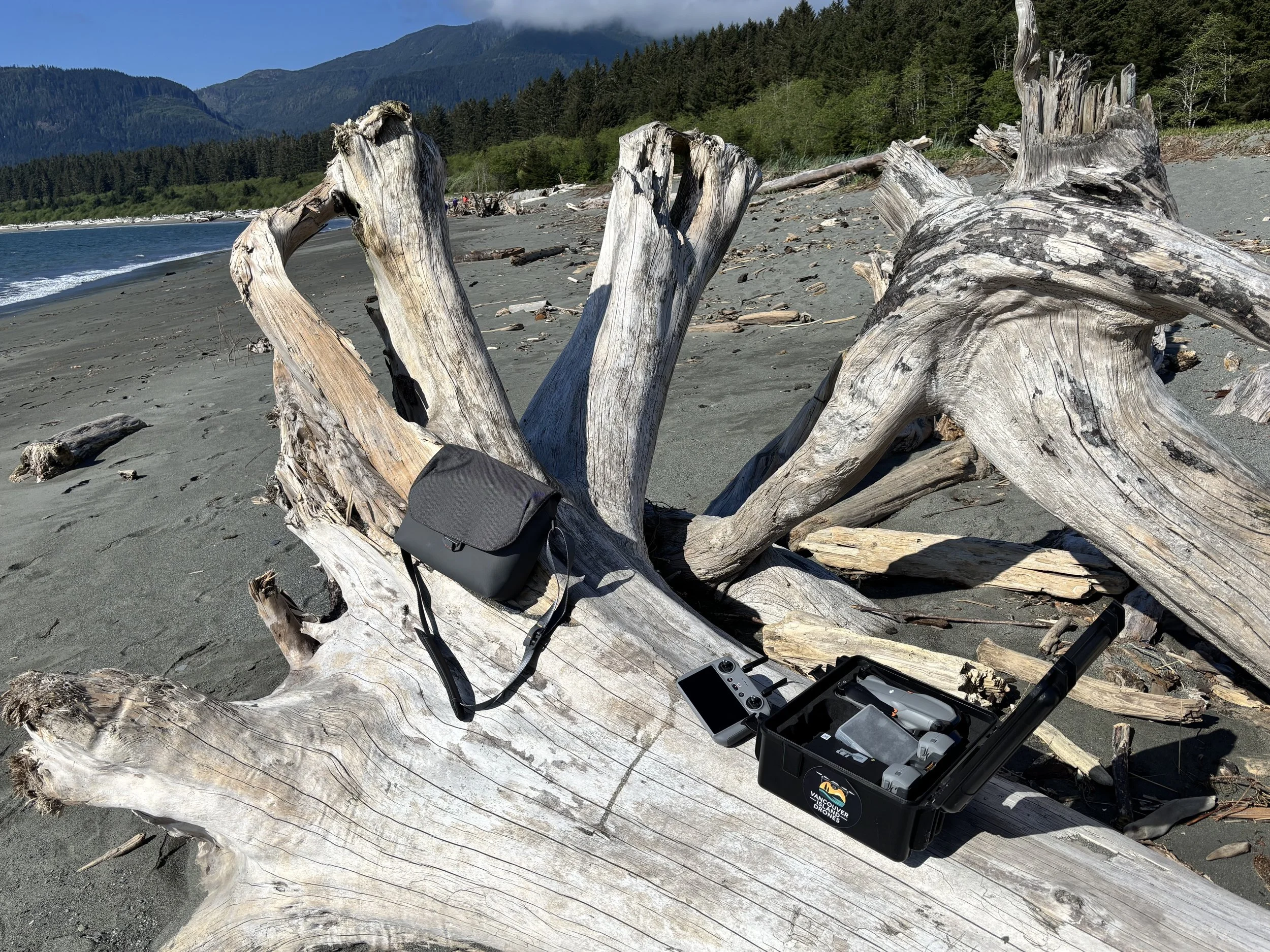
The DJI Air 3S on a windy Vancouver Island beach — exactly the kind of place where bigger starts making sense.
The DJI Mini 5 Pro is a weird drone to talk about in Canada.
Not because it’s bad.
It is absolutely not bad. On paper, it’s kind of ridiculous. A 1-inch sensor, strong video specs, great obstacle sensing, internal storage, modern transmission, and all the usual DJI wizardry stuffed into something that still wants to call itself a Mini.
The problem is the scale.
And look, I’m not exactly the guy to start pointing fingers at something for tipping the scales a little higher than recommended. I’ve never met a pizza I didn’t like, and I’m not standing here pretending I’m built like a carbon-fibre racing drone.
But with drones in Canada, weight actually matters.
The whole magic of the Mini lineup has always been the sub-250g category. That’s the trick. That’s why so many people buy them. A true micro drone gives you flexibility. It keeps things simpler. It lowers the barrier for casual flying, travel, family stuff, quick photos, and those “I just want to throw the drone up for a few minutes without turning this into a Transport Canada homework assignment” moments.
But if the Mini 5 Pro tips over 250 grams in real life — and plenty of people have been talking about exactly that — then the buying decision changes fast.
Because at that point, you have to ask the annoying question:
If it’s not comfortably a micro drone in Canada, is it still the obvious choice?
I’m not sure it is.
If you’re leaving micro territory, what are you actually gaining?
This is where the Air 3S starts to become a much more interesting comparison.
Normally, comparing an Air 3S to a Mini would feel a little unfair. The Air 3S is bigger, heavier, more expensive, and less pocket-friendly. No argument there.
But if the Mini 5 Pro loses some of its Canadian micro-drone magic, then suddenly the question is not just “which drone is smaller?”
The question becomes:
Which drone gives you more for the rules you may already be dealing with?
And that’s where the Air 3S starts looking pretty damn good.
The Air 3S is not pretending to be a micro drone. It never was. It is a larger, more serious flying camera with a bigger battery, dual cameras, and the kind of confidence that matters when you’re flying somewhere other than a perfectly calm soccer field at golden hour.
It knows what it is.
No identity crisis. No bathroom scale drama. No standing there holding its breath hoping it comes in under 250.
The Mini 5 Pro is still seriously capable
To be fair, the Mini 5 Pro is a very capable drone.
If it fits your life, your rules, your comfort level, and your actual measured weight situation, I completely understand why someone would want one. The camera is strong. The size is convenient. The specs are impressive. For travel, family use, social media, quick clips, and casual flying, it makes a ton of sense.
And if you’re mostly flying for yourself, hiking with it, travelling light, or shooting vertical content, the Mini 5 Pro has a lot going for it.
That rotating gimbal thing is clever too.
Do I personally need my drone camera doing gymnastics like it’s trying out for Cirque du Soleil? Not really.
I get why people like it. I can see the appeal for vertical video and social content. It looks cool, especially on drones like the Mavic series where the whole camera head has that more mechanical, purposeful look.
But for the way I shoot — coastlines, properties, beaches, construction-style visuals, tourism scenes, and general Vancouver Island work — it’s not the feature that sells me.
For me, the second camera on the Air 3S is way more useful.
The Air 3S dual-camera setup is not a gimmick
This is the part I don’t want to brush past.
The second camera on the Air 3S is awesome.
Not “neat little bonus feature” awesome.
Actually useful awesome.
The wide camera gets you the big establishing shots: coastline, beaches, properties, landscapes, the kind of aerial perspective people expect from a drone.
But the 70mm medium tele camera gives you a completely different look. It compresses the scene. It pulls distant subjects closer. It gives buildings, boats, trees, shoreline, and mountains more shape. It lets you get shots that feel more intentional and less like “I flew high and pointed the camera down because that’s what drones do.”
That matters.
Especially on Vancouver Island, where so many good shots are about layers: ocean, beach, forest, mountains, clouds, buildings, boats, and whatever weird weather is rolling in next.
The second camera gives you options. Different angles. Different video. Different framing. Different storytelling.
And when you’re doing actual work for someone, options matter.
Sometimes the wide shot is perfect.
Sometimes the tighter shot is the one that looks expensive.
Wind is where the Air 3S earns trust
I know the Air 3S and Mini 5 Pro may have similar official wind-resistance ratings.
Cool.
Specs are useful. They are not the whole story.
A heavier drone in heavier wind simply feels better to me. It feels more planted. More confident. Less like it’s out there getting bullied by the sky.
I had a windy beach job recently on an open ocean beach. The kind of place where you look at the water, feel the breeze coming straight in, and immediately start thinking, “Well, this could get stupid.”
I’ve had wind warnings before at certain beaches. I’ve watched drones fight their way around in coastal air. So I was paying attention.
The Air 3S just handled it.
No drama. No warning. No panic. No “please return to home before I become a very expensive kite.”
It definitely looked like it was working when flying one direction. You could see it fighting the wind. But it kept doing the job, stayed stable, and brought the footage home.
That’s what I care about.
Not because I want to flex a bigger drone. I don’t. Bigger is more hassle. Bigger means more rules. Bigger means you need to actually know what you’re doing.
But when the shot matters, confidence matters more than convenience.
Battery life is not just a number on a spec sheet
The Air 3S also gives you a big battery advantage.
Yes, the official numbers are always best-case fantasy land. Nobody flying on a windy beach is getting the perfect brochure number unless the brochure was written by a very optimistic intern.
If the drone is fighting wind, you are not getting the full rated flight time.
Obviously.
But with the Air 3S, you still feel like you have time. You’re not instantly thinking about swapping batteries. You’re not rushing the shot. You’re not watching the percentage drop and wondering whether you pushed your luck too far.
That matters on real jobs.
Especially when you’ve driven somewhere, checked the airspace, planned the flight, found your takeoff spot, waited for the right light, and now need to actually get the shot.
Battery life is not just about staying up longer.
It’s about reducing pressure.
And the Air 3S gives you more breathing room.
So is the Mini 5 Pro worth it in Canada?
Maybe.
But I think the Mini 5 Pro decision in Canada depends heavily on why you want it.
If you want it because it is small, portable, powerful, and easy to bring everywhere, that makes sense.
If you want it because you shoot a lot of vertical content, travel light, and value convenience above everything else, that makes sense too.
But if you want it mainly because it’s supposed to be a micro drone, I’d be a lot more careful.
Because if your actual flying setup puts it at 250g or more, you’re now in a different world. Registration. Certification. More responsibility. More rules.
And once you’re there, the Air 3S starts looking a lot less like “the bigger expensive one” and a lot more like “the drone that actually gives me more for the hassle.”
Especially now that drones like the Lito X1 exist.
If what you really want is a true micro-style drone experience in Canada, I’m not sure the Mini 5 Pro is automatically the cleanest answer anymore. The market is getting weird, and DJI is not the only name people are looking at.
Good, good DJI. Making drone buying simple, as always.
Check Current DJI Pricing
If you’re actually shopping these right now, it’s worth checking DJI’s current pricing and bundle options directly. The Mini 5 Pro, Air 3S and the newer Lito models move around enough in price that the gap between them can change the buying decision pretty quickly.
Check the DJI Mini 5 Pro pricing on Amazon
Check the DJI Air 3S pricing on Amazon
Check the DJI Lito lineup on Amazon
Why I still reach for the Air 3S
The Air 3S is my daily driver.
I use it for just about everything serious.
It is not the smallest drone. It is not the cheapest drone. It is not the easiest thing to justify if you only fly once every three months and mostly want beach clips for Instagram.
But for the way I actually fly, it makes sense.
The dual-camera setup gives me creative options. The battery life gives me breathing room. The weight gives me confidence in coastal wind. And when I’m doing actual work, I want the drone that feels like it can handle the day instead of the one that looks best in a backpack ad.
That does not mean the Mini 5 Pro is a bad drone.
It means the Air 3S has a real place.
And in Canada, where the Mini 5 Pro’s weight situation makes the buying decision a little less clean, bigger still makes sense sometimes.
Maybe more often than DJI wants to admit.
DJI Air 3S drone returning to land near a rocky Vancouver Island shoreline with ocean, trees, and drone gear case visible.
Related Reads
Drone Accessories I Actually Recommend in Canada
You do not need 47 drone accessories. Just the practical stuff that keeps you flying longer, protects your gear, and saves you from ruining a flight before it even starts.
Which DJI Drone Should You Buy First: Neo 2, Lito 1, or Lito X1?
A practical, slightly biased look at the Neo 2, Lito 1, and Lito X1 — from the flying yellow Labrador to the first real drone and the one you’re least likely to outgrow.
Hiring a Drone Pilot in Victoria, BC — What It Costs and What You Get
Straightforward pricing, what’s included, and what the process looks like if you need aerial photos, video, inspections, or a better look at something from above.
