How to Teach Kids to Fly a Drone (Safe, Simple, and Actually Fun)
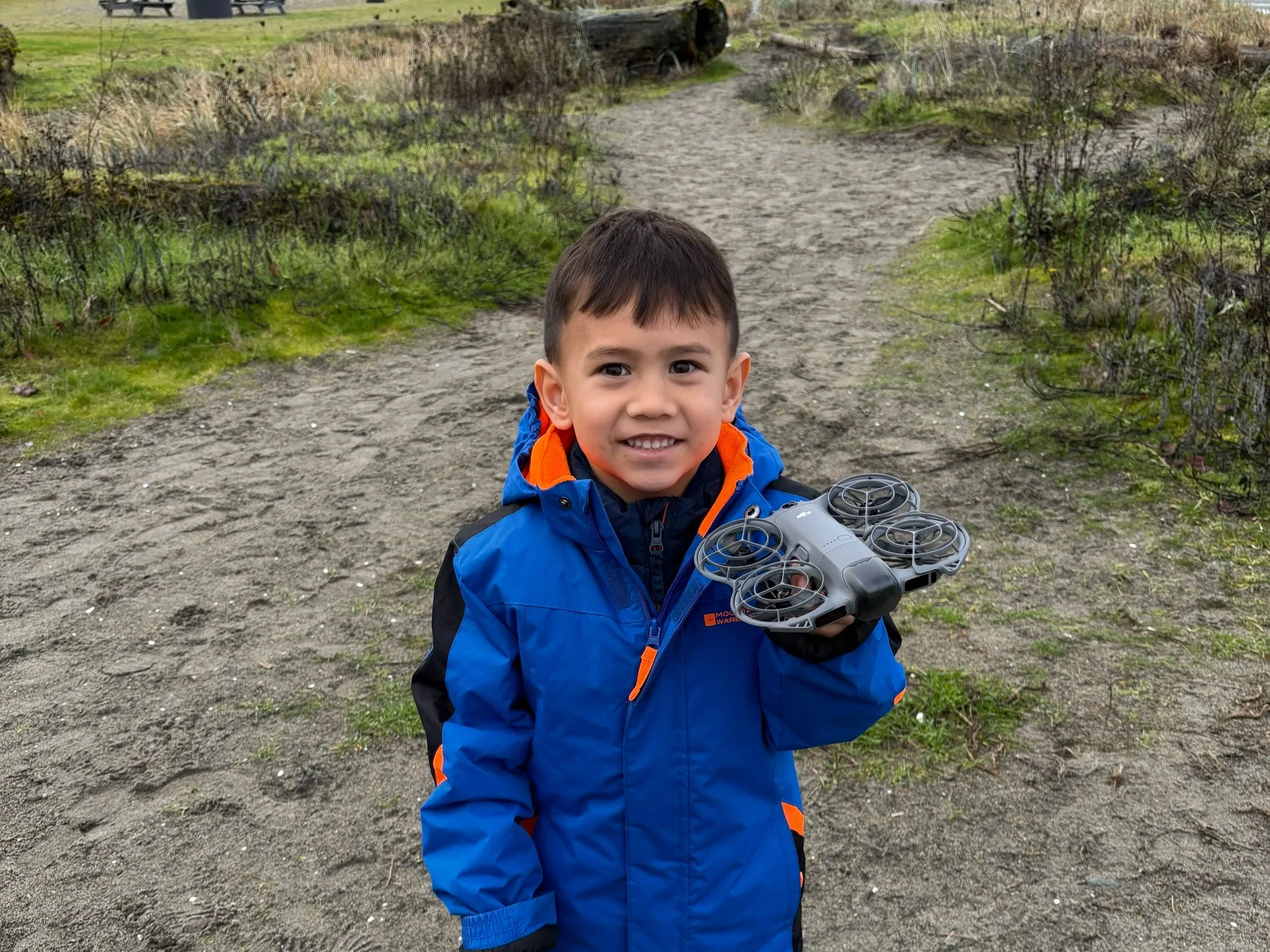
If you’re wondering how to teach a kid to fly a drone safely, you’re not alone.
It’s one of the most fun things you can do together — but it can also go sideways quickly if you don’t set it up right.
I’ve been teaching my four-year-old to fly using everything from a DJI Neo 2 to my Air 3S, and I’ve learned pretty quickly that this isn’t about creating a “pilot.”
It’s about keeping it fun, keeping it safe, and building good habits early.
Here’s what’s actually worked for us — and what I’d recommend if you’re getting started.
Can Kids Fly Drones in Canada?
Yes — but it depends on the drone and how you’re flying.
With micro drones (under 250g), things are a lot simpler. You don’t need a license, and the rules are more relaxed — which is exactly why they’re perfect for learning.
That said, “easier rules” doesn’t mean “no responsibility.”
Even with a small drone, the focus should always be:
staying clear of people
flying in open space
keeping the drone in sight
and knowing when to stop
For kids, the goal isn’t to memorize regulations — it’s to understand how to fly safely and respectfully.
1. Make it exciting, not intimidating
Kids learn best when they’re curious, not when they’re lectured.
That’s why the Neo 2 is perfect for Blake right now.
He doesn’t need to memorize menus or learn stick inputs. He can wave at it. He can talk to it. He can make a tiny machine lift off just by holding out his hand.
The joy shows up instantly.
And once he’s hooked, I can start layering in the important stuff — gently.
2. “Fun” is the door. “Responsibility” is what’s behind it.
Every time we fly, we talk about two things:
1. Drones are fun.
2. Drones can hurt people if you aren’t careful.
That’s the honest truth.
I don’t scare him with it, but I don’t hide it either.
He’s four — he understands more than most adults give kids credit for.
So I frame it like this:
We keep space around people because we don’t want to bonk anyone.
We don’t fly toward strangers.
We keep the drone in front of us so we always know where it is.
We don’t chase dogs, birds, or people (even if it would make a hilarious video).
These aren’t aviation rules to him — they’re just “being a good person rules.”
3. The first lessons are simple
When we practice, everything happens in small steps:
Lesson 1: Takeoff and landing on a palm.
It builds trust and shows him he’s the one in control.
Lesson 2: Hovering.
Just hold a position. No chaos yet.
Lesson 3: Move it toward you, then away.
It teaches spatial awareness.
Lesson 4: Stop when Dad says stop.
The most important rule for a kid, honestly.
None of this is about perfection.
It’s about building confidence and understanding without overwhelm.
4. Micro drone doesn’t mean micro responsibility
This is the part many adults get wrong.
A lighter drone is safer, yes — but it’s not a toy.
Blake sees me filing flight plans, checking weather, scoping out space, and making sure our flights follow the rules.
He doesn’t know the details, but he absorbs the behaviour.
Kids mirror what they see.
If they watch you take drones seriously, they take drones seriously — while still having fun.
5. Sunrise flights are the best learning environment
I fly at sunrise because it’s quiet, respectful, and safer in Victoria’s busy airspace. And it turns out… it’s also the best time for a kid to learn.
No crowds.
No distractions.
No dogs running under the drone.
No worrying about people thinking we’re filming them.
Just a calm space to practice.
When he’s with me on a morning flight, that’s when the “little lessons” stick the most.
6. Let them enjoy it — but teach them the why behind every rule
Kids don’t need the Canadian Aviation Regulations in their back pocket.
They just need to understand the spirit of the rules:
We keep drones away from people to keep them safe.
We fly where we have room.
We stop if something doesn’t feel right.
We respect the space around us.
We don’t fly when the wind is too strong (even if it looks calm on the ground).
We don’t push our luck.
Teaching why builds habits that last longer than teaching “because Dad said so.”
7. This is how I hope the hobby survives
Drones are getting smarter, safer, and easier every year.
But the people flying them still matter.
If a new generation learns early that drones are fun and require responsibility…
that’s how you keep the hobby alive, respected, and safe for everyone.
For us, it’s not about making Blake a drone pilot today.
It’s about showing him something cool and teaching him to treat it — and other people — with care.
And honestly?
These little moments together will matter way more than whatever footage we bring home.
If this kind of father–son flying, safe teaching, and West Coast drone storytelling is your thing, there’s plenty more coming — especially once the Neo 2 arrives and Blake decides he can fly better than I can.
Best Drone for Kids (The Honest Answer)
Most “best drones for kids” lists completely miss the point.
They’ll recommend something like the DJI Mini 3 — and on paper, that sounds reasonable.
But in real life?
It’s actually a terrible drone for a kid to start with.
Why the Mini 3 Doesn’t Make Sense for Kids
It’s still a full drone.
Which means:
a full controller (not small hands friendly)
no collision avoidance
no forgiveness when things go wrong
requires proper stick control
For an adult, that’s fine.
For a kid?
That’s how you turn something fun into something frustrating — or worse, something broken.
Why the DJI Neo 2 Is the Right Starting Point
The Neo 2 flips that entire experience.
It’s built for:
bumping into things without instantly ending the day
learning without pressure
actually having fun right away
And more importantly, it gives you options:
follow-me
gesture control
voice control
controller when they’re ready
FPV later if you want to level up
That flexibility matters a lot.
The Part Most People Get Wrong
A kid doesn’t need a “good drone.”
They need a drone that:
doesn’t punish mistakes
doesn’t overwhelm them
makes them want to keep using it
The Neo 2 does that better than anything else right now.
And the price point makes it a lot easier to hand over without stress.
What Happens Next
Once they’re comfortable?
That’s when something like a Mini 3 or Mini 4 actually makes sense.
But starting there?
That’s backwards.
Related Flights & Articles
DJI Lito X1 vs Mini 4 Pro: This Changes What Drone I Recommend in Canada
A closer look at how the Lito X1 stacks up against the Mini 4 Pro — and why it might be the better buy for most people now.
DJI Neo 2 After 3 Months — Still Worth It?What happens after the novelty wears off. Real use, real bumps, and why this thing still comes everywhere with us without even thinking about it.
Hiring a Drone Pilot in Victoria, BC — What It Costs and What You Get
Straightforward pricing, what’s included, and what the process looks like if you need aerial photos, video, inspections, or a better look at something from above.
