Why Vancouver Island Is Perfect for Quiet, Cinematic Aerial Stories
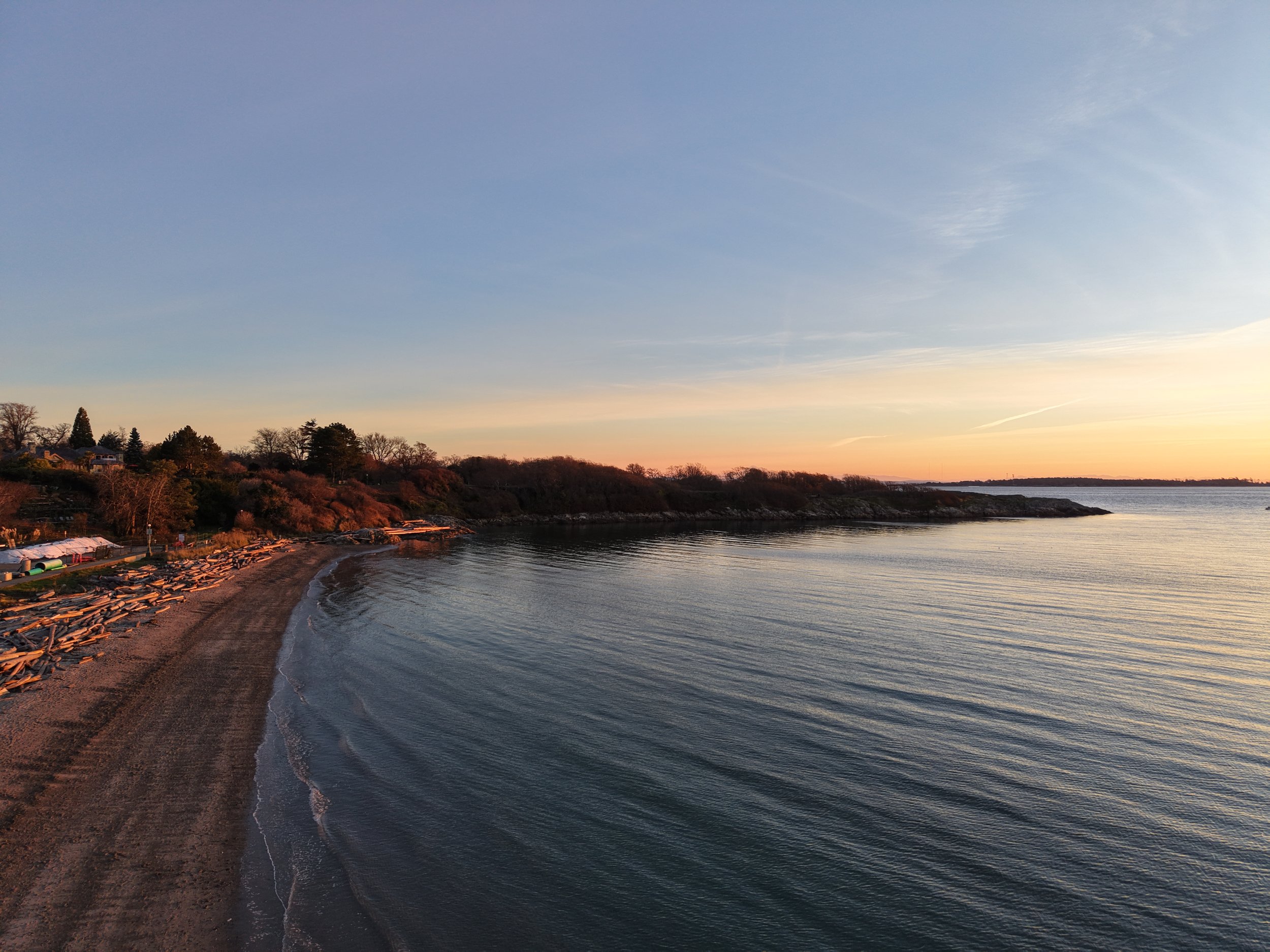
If you’ve watched any of my videos, you’ve probably noticed something about the locations: nothing is flashy. There are no neon skylines, no drone fly-throughs of city towers, no big cinematic set pieces. Just beaches. Heritage sites. Driftwood. Fog. Little pockets of the Island that most people drive past without a second thought.
That’s all on purpose.
Vancouver Island has a way of telling its own story — quietly, patiently, without needing you to force anything. And that’s exactly why it has become the heart of every cinematic piece I make.
Here’s what makes this place so naturally perfect for aerial storytelling.
1. The Island doesn’t rush
Some landscapes demand energy.
Vancouver Island invites you to slow down.
Whether I’m flying over Coal Island, walking onto Willows Beach before the day begins, or standing on damp sand in Parksville with the sun barely awake, the Island sets the pace. The shots come from being present rather than pushing for something dramatic.
That slower rhythm shows up directly in the footage.
It’s why my videos aren’t filled with fast cuts — the locations don’t ask for them.
2. Small places carry big stories
Most people think aerial cinematics are all about grand vistas.
Mountains. Skyscrapers. Waterfalls.
But some of the most meaningful shots I’ve ever taken have come from places you could miss if you blinked:
an old jetty half-covered in moss
a derelict building on a tiny island
a stretch of shoreline that only locals really know
the worn footpaths around Cattle Point
the quiet curve of a Westshore beach at sunrise
These aren’t the kind of places that end up in tourism commercials.
They’re lived-in. Familiar.
Real.
That’s where the good stories hide.
3. The weather creates its own atmosphere
On Vancouver Island, the weather is the cinematographer half the time.
Fog rolls in out of nowhere.
A calm sea suddenly starts to breathe.
Light hits the water in a way you couldn’t plan even if you tried.
Some mornings you get color.
Some mornings you get cloud.
Some mornings you get nothing but grey — and somehow that still works.
You don’t control the look.
You accept what the Island gives you.
That honesty is a big part of the aesthetic.
4. The Island is full of places people think they already know
Willows Beach.
Esquimalt Lagoon.
Dallas Road.
Cadboro Bay.
Saxe Point.
The Inner Harbor.
Everyone here has been to these places.
Everyone has a memory tucked into them somewhere — childhood beach days, family picnics, walks with friends, first dates, foggy dog walks, early-morning coffee runs.
Aerial footage doesn’t change those places.
It just lets people see them again, from a different angle — familiar, but new.
That’s why these spots resonate so strongly when you film them the right way.
5. Aerial storytelling fits the West Coast personality
People on Vancouver Island don’t respond to hype.
They respond to things that feel real.
Big dramatic drone moves and over-edited sequences don’t match the tone of the Island. The place itself is the story. The drone is just the tool that lets me share it.
The quiet drift of the Air 3S, the colour grading that leans toward natural, and the slow voiceovers all come from trying to match the character of the landscape — not overpower it.
When the footage feels calm, it feels like home.
6. I fly here because it feels like the right way to show the Island
There are days when I wish I had mountains or deserts or neon cities to film. But then I watch a sunrise at Willows or a fog bank creep over the Lagoon and I remember:
This is enough.
More than enough.
The Island gives you the kind of moments that don’t need explaining — they just need someone to show up with a drone, fly safely, and press record at the right time.
That’s the work I want to keep doing.
7. This is the direction going forward
Quiet, honest, cinematic pieces.
Father–son mornings.
Local history tucked into visual stories.
Heritage sites. Beaches. Lagoons.
Little places with big atmosphere.
No gimmicks.
No hype.
Just Vancouver Island — seen from above, but told from the ground.
If that’s your kind of thing, there will always be more on the way.
More From Vancouver Island Drones
Aerial Photography & Video in Victoria — Why Everything Starts With a Conversation
A look at how we approach real, human, conversation-first aerial work in Greater Victoria.
Aerial Photographer in Victoria — What to Know Before Hiring One
Key things locals should look for when choosing a drone photographer who’s compliant, safe, and storytelling-minded.
Aerial Videographer in Victoria — What Makes Footage Stand Out
A breakdown of what separates cinematic, meaningful aerial video from basic flyovers.
