DJI Mic Mini 2 vs Mic Mini: This Much Audio Tech for This Price Is Stupid
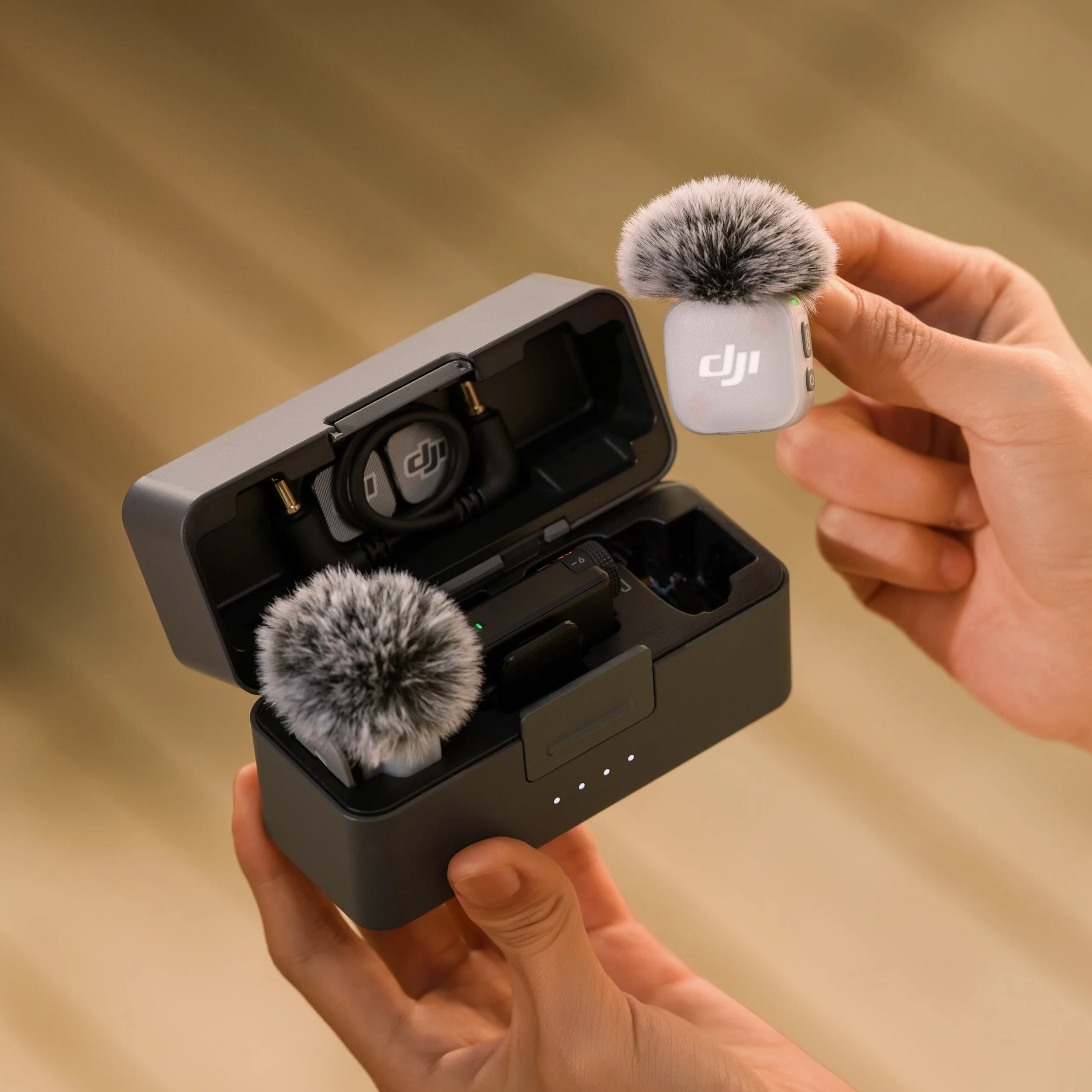
The DJI Mic Mini is one of those pieces of gear I didn’t expect to like as much as I do.
It’s just a tiny wireless microphone.
That does not sound exciting unless you’re the kind of person who owns too many batteries, has opinions about wind noise, and has accidentally turned “just grabbing a quick clip” into a full personality disorder.
Unfortunately, I am that person.
And honestly, the Mic Mini is slicker than it has any right to be.
Small, light, easy to use, clean enough for real-world video, and cheap enough that you start wondering why bad audio is still allowed to exist.
Then DJI went and released the Mic Mini 2, because apparently DJI looked at my bank account and thought, “He seems too calm.”
Good, good DJI.
The Original Mic Mini Already Makes a Lot of Sense
I have the original DJI Mic Mini, and I love it.
Not in a dramatic “this changed my life” way. I’m not standing on a mountain holding a tiny microphone while orchestral music swells in the background.
But in the much more useful way: it actually gets used.
That matters.
A lot of gear sounds cool when you buy it, then ends up living in a drawer with old cables, mystery adapters, and that one USB-C thing you’re afraid to throw away because you’re sure it belongs to something important.
The Mic Mini is not like that.
It’s small enough to toss in a bag. It connects easily. It works well with DJI gear. It makes phone and action-camera audio sound a lot less like you recorded it from inside a cereal box during a windstorm.
And once you start using a real mic, you realize something unfortunate.
Bad audio has been quietly ruining everything.
You can forgive slightly imperfect video. You can forgive a little shake. You can forgive a shot that isn’t perfectly framed.
But bad audio?
Bad audio makes a video feel cheap instantly.
It doesn’t matter if the drone shot is gorgeous, the light is perfect, and the West Coast is doing its ridiculous “look how beautiful I am” routine.
If the audio sounds like you recorded it through a wet sock, the whole thing falls apart.
The Mic Mini Also Taught Me Something About Myself
The first time I really listened back to my own audio through the Mic Mini, I learned something.
Apparently, I breathe like I’m hiding from a bear.
Deep breathing. Nose noise. A little nostril whistle. Very professional. Very cinematic. Very “middle-aged man has discovered high-quality audio and now regrets knowing things.”
Nobody warns you about that part.
You buy a nice microphone thinking it will make your videos sound better, and it does.
Unfortunately, it also makes you hear yourself.
All of yourself.
Every breath. Every little mouth noise. Every time your nose decides it wants a supporting role.
So yes, the Mic Mini improves your audio.
It may also improve your self-awareness in ways you did not ask for.
Still worth it.
Annoying, but worth it.
Why Tiny Wireless Audio Is Kind of Ridiculous Now
This is the part that still blows me away.
Not that wireless mics exist.
We’ve had wireless audio for a long time.
What’s crazy is how small, affordable, and easy this stuff has become.
The Mic Mini is tiny. The Mic Mini 2 is still tiny. DJI lists the Mic Mini 2 transmitter at around 11 grams, which is basically nothing. That’s “did I remember to put it in my bag?” weight. That’s “I might lose this in a hoodie pocket and find it in July” weight.
And yet this little thing can make your video sound dramatically better.
That’s the real story.
Not the colours.
Not the little accessory ecosystem.
Not the spec-sheet chest thumping.
The real story is that a tiny wireless microphone setup can now be affordable enough and easy enough that bad audio starts becoming harder to excuse.
If you’re making videos for YouTube, Instagram, Facebook, your website, your business, your kid’s bike ride, your drone adventures, behind-the-scenes clips, product reviews, or whatever other nonsense you’ve accidentally turned into content, audio matters.
And DJI is making that easier.
Rude of them, honestly.
So What Did DJI Actually Change With the Mic Mini 2?
The Mic Mini 2 does not look like DJI threw the original in the garbage and started over.
This feels more like DJI took an already good idea and made it more approachable, a little more creator-friendly, and a little more polished.
DJI is pushing the Mic Mini 2 with multi-colour magnetic covers, three voice tone presets, mixed device connection, OsmoAudio support, long battery life, and compact all-in-one storage.
In normal human language, that means:
It’s still tiny.
It still fits the DJI creator ecosystem.
It still makes easy wireless audio the whole point.
It now has more personality.
And yes, it has pretty colours.
I’m not going to pretend the colours are the reason to buy a microphone.
But I’m also not above admitting that DJI making tiny gear look better is part of their evil little charm.
They know exactly what they’re doing.
“Here’s the same useful little audio thing, but now it looks nicer and costs less than you expected.”
That is how they get you.
That is how we end up in DJI Addiction Anonymous.
Meetings are at sunrise.
Bring charged batteries and apparently a microphone.
The Voice Presets Are Interesting
The Mic Mini 2 adds voice tone presets, which sounds like one of those features I would normally roll my eyes at.
Because I do not need a microphone trying to give me a radio voice.
I already sound like me. Unfortunately, that is the arrangement we’re working with.
But I can see the appeal.
Different people sound different. Some voices are thin. Some are boomy. Some are sharp. Some people sound like they’re announcing a monster truck rally in a bathroom.
A few simple voice presets can help regular people get better audio without opening editing software and pretending they understand EQ.
That matters for casual creators.
Not everyone wants to become an audio engineer.
Most people just want to talk, record, and not sound like they’re being interviewed during a windstorm beside a leaf blower.
If DJI can make that easier, good.
The DJI Ecosystem Is the Real Hook
This is where DJI gets dangerous.
Because the Mic Mini and Mic Mini 2 are not just microphones.
They are little pieces of a bigger trap.
A beautiful, well-designed, wallet-draining trap.
If you’re already using DJI gear — an Osmo Nano, Osmo Pocket, Osmo Action, or anything that supports DJI’s OsmoAudio system — the appeal gets obvious fast.
The less you have to fiddle with receivers, cables, apps, adapters, and “why isn’t this connecting?” moments, the more likely you are to actually use the gear.
That’s the whole point.
The best gear is the stuff you don’t have to talk yourself into using.
The Mic Mini works for me because it reduces friction.
The Mic Mini 2 looks like it keeps pushing in that same direction.
Easy audio.
Small package.
Good enough quality.
Less nonsense.
That’s a strong combination.
Do You Need to Upgrade From the Original Mic Mini?
Probably not.
And I say that as someone who likes the original Mic Mini a lot.
If you already own the Mic Mini and it’s doing what you need, relax. Your tiny microphone did not become garbage overnight.
This is not the Mini drone lineup getting bullied by the Lito series.
This is more like DJI giving an already good little product a nicer jacket, a better haircut, and a few new tricks.
If your Mic Mini is working, keep using it.
That’s where I’m at.
I don’t feel like I need to sprint out and replace mine just because DJI put a shiny new number on the box and added some creator-friendly touches.
Would I like the new one?
Probably.
Do I need it?
No.
Will that stop me from looking at it?
Also no.
I’m not made of stone.
Who Should Buy the Mic Mini 2?
If you don’t already own a wireless mic, the Mic Mini 2 makes a lot of sense.
Especially if you’re creating simple real-world content and you don’t want to turn audio into a full production.
This is the kind of mic that makes sense for people filming:
drone content
behind-the-scenes clips
family videos
travel videos
Instagram Reels
YouTube Shorts
business updates
website videos
walk-and-talk clips
product reviews
garage nonsense
West Coast adventures
children roasting your driving ability
You know.
Normal life.
If you’re already using DJI camera gear, it makes even more sense. The ecosystem support is the quiet killer feature here.
Small mic. Easy connection. Better audio.
That’s the whole pitch.
Who Should Not Buy It?
If you need more advanced audio features, you may want to look higher up DJI’s mic lineup.
The Mic Mini and Mic Mini 2 are about being small, easy, and affordable.
They are not trying to replace every professional audio setup.
If you need internal recording, more advanced monitoring, more professional backup options, or a setup for bigger productions, this may not be the right lane.
And that’s fine.
Not every piece of gear needs to pretend it’s for everyone.
The Mic Mini line is for people who want audio to get better without the process getting stupid.
That is a very good lane.
Why This Matters for Drone and Creator Content
This is where the Mic Mini 2 fits into the bigger picture for me.
A lot of drone people focus on the visuals.
Understandably.
Drones are flying cameras. The whole point is the view.
But if you’re making content around the drone — talking to camera, showing behind-the-scenes, filming gear, explaining a job, doing a review, making a short Reel, or adding a quick intro to a blog post — audio suddenly matters.
A lot.
The drone shot might get someone’s attention.
The audio keeps them from leaving.
That’s why I like having a small mic setup around.
It helps bridge the gap between “pretty footage” and actual communication.
And for Vancouver Island Drones, that matters more than it used to.
I’m not trying to make long-form videos out of every little clip anymore. A lot of the video I capture now ends up as short website inserts, blog embeds, Google Business posts, Instagram clips, or quick context around a real shoot.
For that kind of content, a tiny wireless mic is perfect.
You don’t need a studio.
You don’t need a full audio bag.
You don’t need to look like you’re about to host a podcast in a bunker.
You just need clean enough audio that people don’t hate listening to you.
Low bar.
Shockingly important.
The Price Is the Part That Gets Me
This is the real angle.
Not the colours.
Not the tiny size.
Not even the DJI ecosystem, though that helps.
The real angle is that wireless audio has become stupidly accessible.
Years ago, getting decent wireless audio felt like a bigger commitment. More money. More gear. More setup. More ways to screw it up.
Now DJI is out here making tiny mic kits that normal people can actually justify.
That is wild.
If you’re already spending money on cameras, drones, action cams, phones, mounts, batteries, memory cards, editing apps, and whatever other content goblin accessories you’ve accumulated, a good little mic setup might be one of the smartest upgrades you make.
Because bad audio makes everything feel worse.
And good audio makes basic video feel more professional almost instantly.
Very annoying.
Very true.
Check DJI’s Current Price
If you’re looking at the DJI Mic Mini 2, I’d check DJI directly for the latest price, bundles, and specs here:
Check the DJI Mic Mini 2 price and specs on DJI’s website
Final Take
The DJI Mic Mini 2 does not need to be some dramatic reinvention.
The original Mic Mini was already a slick little piece of gear.
Tiny.
Easy.
Useful.
Affordable.
The Mic Mini 2 looks like DJI taking that idea and making it even more tempting for new buyers.
Better presentation. More personality. More creator-friendly features. Same basic idea: make wireless audio less annoying and more accessible.
If you already own the Mic Mini and like it, you probably don’t need to panic-upgrade.
If you don’t own either one, the Mic Mini 2 is probably the cleaner buy now.
And if you’re still recording videos with terrible built-in phone audio while standing outside in the wind, breathing through your nose like a wounded moose?
Maybe it’s time.
Just be warned.
A good mic will make your videos sound better.
It may also introduce you to your own nostril whistle.
And once you hear that, there’s no going back.
Related Reads
DJI Osmo Nano: A Tiny Camera We Take Everywhere
A real-world look at the tiny DJI camera that keeps ending up in the bag, on the truck, or attached to a kid — and why small, easy gear usually gets used the most.
DJI Neo 2 Review: The Best First Drone for Kids, Creators, and Wannabe Jedi
Palm launch, gesture control, follow-me tracking, and just enough DJI wizardry to make a tiny drone feel like a personal videographer you can pull out of your pocket.
Hiring a Drone Pilot in Victoria, BC — What It Costs and What You Get
Straightforward pricing, what’s included, and what the process looks like if you need aerial photos, video, inspections, or a better look at something from above.
