Enterprise Drones in Construction: Why the DJI Matrice Exists
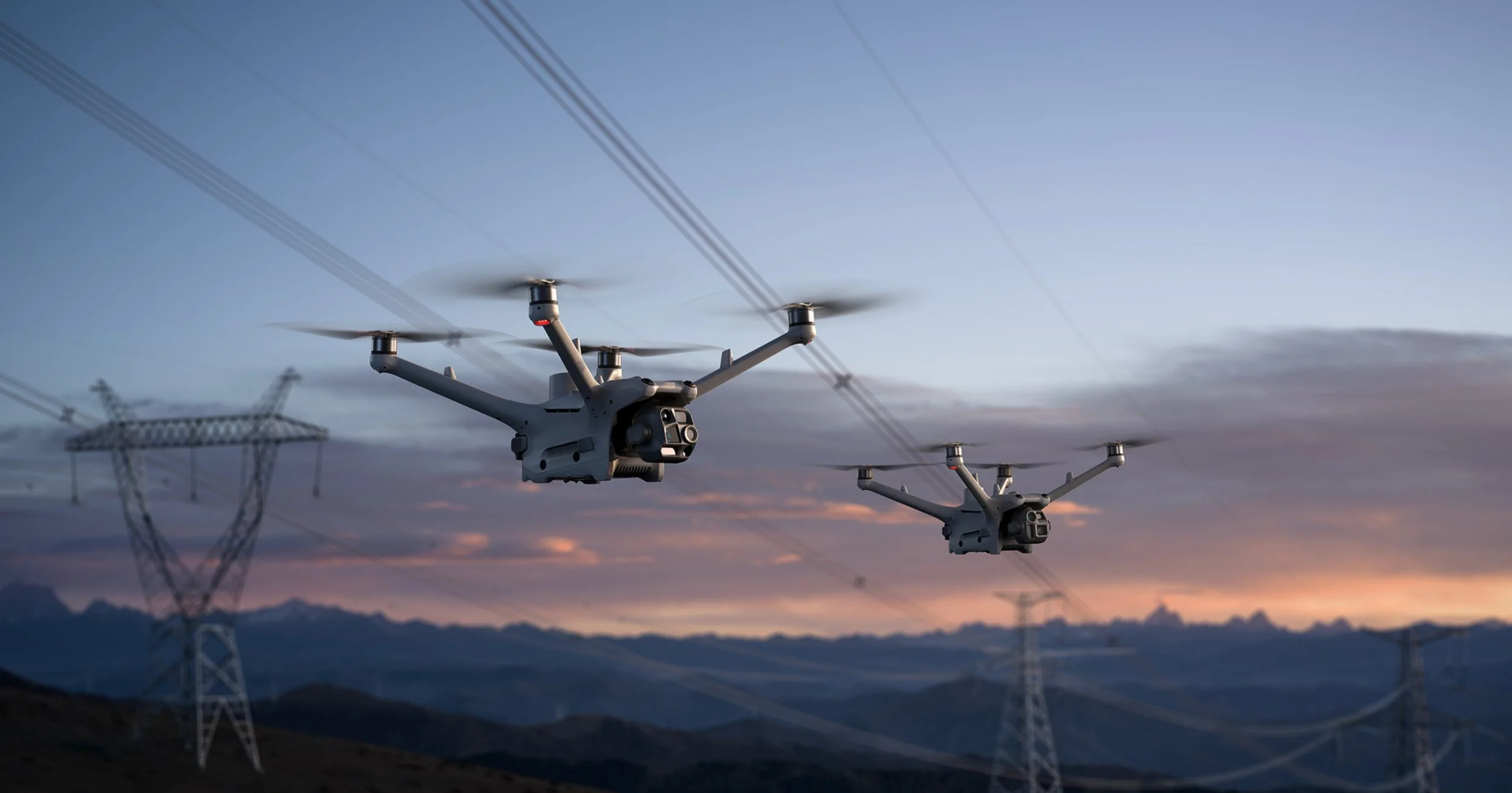
Most construction projects don’t need a drone that looks like it belongs on a sci-fi movie set.
But some do.
And that’s exactly why the DJI Matrice exists.
Enterprise drones weren’t built for cinematic shots or marketing videos. They were built for job sites where accuracy, repeatability, and documentation matter more than aesthetics. Construction was one of the first industries to really take advantage of that.
Construction Has a Visibility Problem
Construction sites change constantly. What was accurate last week may already be outdated, and relying on walk-throughs, ground photos, or memory introduces gaps quickly.
Common challenges include:
Lack of up-to-date visual progress information
Inefficient collaboration between teams and stakeholders
Rework caused by missed or outdated data
Time and cost lost to manual measurements
This is where enterprise drones started to make sense.
What Enterprise Drones Are Used for in Construction
Enterprise platforms like the DJI Matrice are designed for repeatable data collection, not one-off flights.
Typical construction use cases include:
Progress tracking over time using consistent flight paths
2D and 3D site models for comparison against historical data
Earthwork and stockpile measurements using point clouds
Pre-build and post-build documentation
Inspections that would otherwise require lifts, scaffolding, or working at height
Instead of relying on estimates, teams can work with visual records that can be reviewed, shared, and compared.
Why the DJI Matrice Is an “Enterprise” Drone
From the outside, the DJI Matrice just looks like a larger drone. The difference is what it’s built to do reliably, over and over, in real job-site conditions.
Enterprise drones are designed around:
Mechanical shutters and RTK for centimetre-level accuracy
Repeatable missions that collect data the same way every time
Multiple data outputs such as orthomosaics, point clouds, and 3D models
Workflow integration with enterprise mapping and management software
Longer flight times and better environmental tolerance than consumer drones
They’re tools built for measurement and documentation, not convenience flying.
Automation and Routine Site Monitoring
On larger or long-term projects, enterprise drone systems can be paired with docked or scheduled workflows that allow routine site monitoring without a pilot being physically present every time.
This makes it easier to:
Capture consistent progress data
Compare changes over weeks or months
Share information across teams
Reduce manual site visits for visual checks
At scale, drones become part of the project workflow rather than a novelty.
Earthwork and Stockpile Measurement
Enterprise drones are also commonly used for earthwork tracking.
By generating dense point clouds and 3D models, teams can:
Measure stockpile volumes more frequently
Reduce labour time and exposure on active sites
Improve accuracy by repeating the same flight plans
Compare cut and fill over time
This is one of the clearest examples of drones replacing slow, manual processes with faster, safer data collection.
Not Every Project Needs an Enterprise Drone
It’s worth saying plainly: most construction projects don’t need enterprise drones.
Enterprise platforms make sense when:
Accuracy is critical
Flights are frequent and repeatable
Data is compared over time
Outputs are used for measurement, planning, or reporting
For many projects, simpler aerial documentation is still perfectly adequate.
Final Thought
The DJI Matrice wasn’t designed to be impressive. It was designed to be useful.
Construction sites were an early fit because they benefit from consistent, accurate, repeatable visual data. Enterprise drones exist for the situations where precision and workflow integration justify the complexity.
For readers who want a deeper technical breakdown of DJI’s enterprise platforms and construction workflows, DJI’s own documentation is the best place to explore further:
Learn more about DJI Enterprise drones here:
Disclosure: This article is for informational purposes only. The author is not affiliated with DJI and is not selling DJI products or services. The DJI Matrice is referenced here as an example of an enterprise-class construction drone platform.
Related Articles
Business & Property Drone Services
Professional aerial photos and video for businesses, restaurants, hotels, and properties across Greater Victoria — handled safely, legally, and without guesswork.
Construction Drone Services
Progress tracking, site documentation, and inspections for construction projects in the Westshore and Greater Victoria, with compliant and insured operations.
DJI Drones & Accessories
Straightforward reviews and recommendations for DJI drones and accessories, based on practical experience and long-term use.
