The Captain’s Log
Aerial stories, father–son adventures, and life on the edge of the Pacific.
Aerial Videographer in Victoria — What Makes Footage Stand Out

I’ll start this the same way I started my photography post:
I’m not a big studio, and I’m not pretending to be one. I’m just a Westshore guy who genuinely enjoys getting up early, flying safely, and putting together calm little videos that show off the Island in a way you don’t usually see from the ground.
If you’re thinking about hiring someone for aerial video around Victoria, here’s what I’ve learned from actually filming here — slowly, consistently, and with a lot of respect for the airspace and the coastline we’re working in.
This isn’t “expert advice.”
It’s just the honest perspective of someone who loves doing this and tries to do it properly.
1. Victoria isn’t the easiest place to get clean aerial video
If you’re shooting video, you need stable air and predictable conditions — and Victoria doesn’t always offer either.
From the ground, it looks peaceful.
From the sky, it’s one of the more complicated places in Canada to fly:
• constant floatplane traffic
• Helijet
• Coast Guard
• two hospital helipads
• multiple military restricted zones
• a surprisingly large YYJ controlled airspace footprint
• coastal winds that can change in seconds
This doesn’t make filming impossible.
It just means you need to know what you’re doing before you take off.
For me, that means flying with Transport Canada Advanced certification and filing NAV CANADA airspace requests when needed. That’s not something I brag about — it’s just what responsible flying looks like in this region.
2. Aerial video doesn’t need to be dramatic to stand out
There’s no shortage of hyper-edited, fast-cut drone reels out there. That style has its place, but it’s not really what I enjoy or what most people around here seem to connect with.
The Island has its own pace.
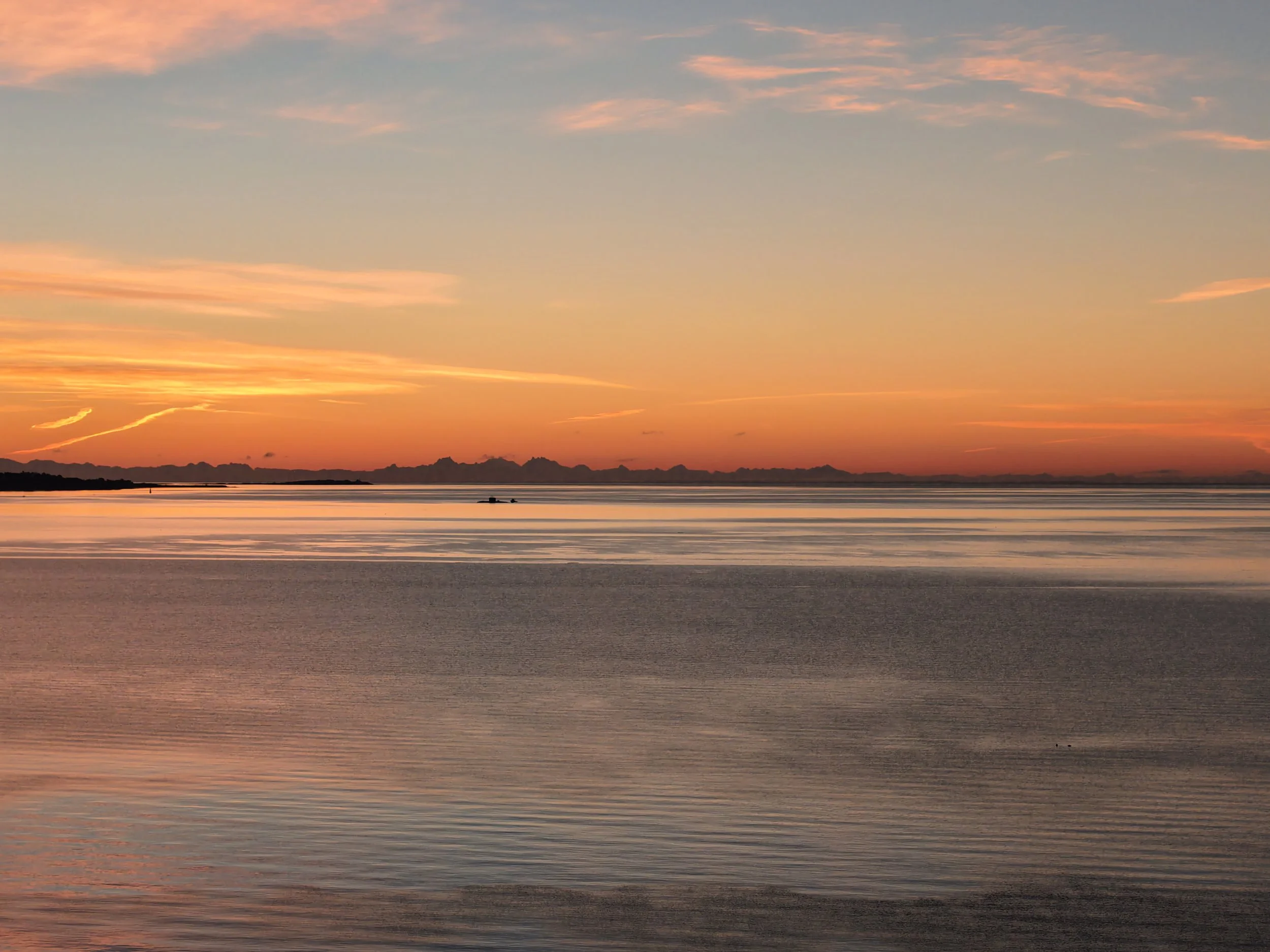
What makes aerial video here stand out isn’t intensity — it’s calm:
• slow reveals over the coastline
• early-morning softness
• muted West Coast colors
• water that shifts between blues and greens
• the way the light hits rooftops, tree lines, or quiet beaches
You don’t need to manufacture “wow.”
The Island already has it — you just have to capture it honestly.
3. A good aerial video starts with a simple conversation
Most people don’t come to me with a script.
They come with a feeling:
• “I want this to look peaceful.”
• “I want people to understand where we are.”
• “I’d love a short clip for our website.”
• “I’m curious what this looks like from above.”
That’s enough.
A short conversation helps me understand the tone you want — clean, simple, natural — and we build from there. I’m not aiming to make commercials. I’m trying to make videos that feel like the Island.
4. Stability and pacing matter more than fancy moves
Drone videography isn’t about showing off what the drone can do. It’s about showing the viewer something they haven’t seen — clearly and calmly.
The things that matter most are quiet:
• smooth movement
• consistent speed
• gentle altitude changes
• predictable arcs
• letting scenes breathe
Most people don’t comment on these things directly, but they feel them.
Calm footage stays watchable.
Chaotic footage gets skipped.
5. Safe flying makes for better video
It’s hard to get good footage if you’re rushing, stressed, or cutting corners.
Safe, legal, unrushed flying creates an environment where the video comes out naturally.
That means:
• choosing realistic locations
• avoiding restricted zones
• planning launch sites
• watching the wind along the shoreline
• keeping the flight simple and intentional
None of this should feel like a production.
It should feel like a quiet little window into a place you love.
6. Look for someone who’s honest about what’s possible
Aerial video doesn’t always work every day or in every condition. Some days the wind says no. Some places are off-limits. Sometimes you need to come back at sunrise.
If you’re hiring someone, the best question you can ask is:
“What’s realistically possible here?”
The right answer is rarely “everything.”
And that’s a good sign.
Final thoughts
Aerial video in Victoria doesn’t need to be complicated or flashy. If anything, the Island looks better when you keep things simple.
If you’re thinking about a short, calm, cinematic video of a place that means something to you, I’m always happy to chat. I fly safely, follow the rules, and try to create little pieces of the West Coast you can look back on.
Sometimes the quietest footage ends up being the most memorable.
Related Flights & Articles
Why Vancouver Island Is Perfect for Quiet Cinematic Aerial Stories
How calm light, coastal textures, and slower landscapes shape the Island’s cinematic style.
Aerial Photographer in Victoria — What to Know Before Hiring One
A clear, practical guide for anyone choosing a photographer for aerial stills in Greater Victoria.
Why I Fly at Sunrise — A West Coast Morning Ritual
The lighting, rhythm, and atmosphere behind the Island’s most cinematic moments.
Aerial Photographer in Victoria — What to Know Before Hiring One
Cole Island
I’m not a big fan of pretending to be something I’m not, so let me start here:
I’m not a massive production company, and I’m not trying to sound like I’ve spent decades shooting commercial campaigns. I’m just a Westshore guy who loves getting up before sunrise, flying safely, and showing people places they’ve driven past for years but never really seen from above.
If you’re thinking about hiring someone for aerial photos or video in Greater Victoria, here’s what I’ve learned from actually flying here — consistently, carefully, and with a real respect for the rules and the airspace we’re operating in.
1. Victoria is more complicated to fly than most people think
I didn’t fully appreciate this when I first started, but Victoria’s airspace is… a lot.
It looks peaceful from the ground, but the sky is busy and restricted in ways most people never notice:
• constant floatplane movements
• Helijet
• Coast Guard
• ferries and marine corridors
• multiple DND restricted zones
• two active hospital helipads
• a huge YYJ controlled airspace footprint
Most of the city — even neighbourhoods nowhere near the airport — sits inside controlled airspace.
None of this makes flying impossible.
It just makes local knowledge and proper procedures important.
2. You don’t need a photography “expert” — you need someone who flies responsibly
Most people don’t care how many buttons a drone pilot knows how to press.
They just want someone who:
• understands where they’re flying
• respects local restrictions
• doesn’t take risks
• communicates clearly
• and does the job properly
For me, that means:
• I hold Transport Canada Advanced certification
• I file flight plans and NAV CANADA requests when they’re required
• I stay well clear of restricted military zones
• I follow the rules that keep everyone safe — you, me, and the people below
This isn’t something I brag about.
It’s just the baseline for operating here without causing problems.
3. Aerial photos should feel like Vancouver Island — not stock footage
The thing that keeps me doing this isn’t the gear — it’s the way this place looks from above when the light is right.
• that soft, calm morning glow
• muted skies over the Westshore
• the blue-green water that doesn’t look like anywhere else
• rocky edges, tree lines, and quiet neighborhoods waking up
Good aerial photos here don’t need to be dramatic.
They just need to feel like the Island.
4. A simple conversation is enough
Most people don’t come in with a storyboard.
They just tell me the real reason they want a shot:
• “I’m curious what this looks like.”
• “I want something clean for my website.”
• “This place means something to me.”
That’s all it takes.
A short conversation usually tells me everything I need to know about how to approach it.
5. Safety shouldn’t be a sales pitch — it should just be normal
Flying safely in Victoria isn’t optional.
It’s just part of the job.
That means:
• choosing the right launch site
• watching the wind and weather
• planning flight paths
• maintaining line-of-sight
• respecting wildlife and privacy
• making sure flights are legal before they ever happen
Again — none of this should be dramatic.
It should just be assumed.
6. Look for honesty, not perfection
If you’re thinking about hiring someone, it’s okay to ask:
• “Are you comfortable flying in this specific area?”
• “What happens if the weather shifts?”
• “Can you show me a few recent examples?”
• “Is this even a good day for this?”
You don’t need a photographer with an award cabinet.
You just need someone who will tell you the truth.
Final thoughts
Victoria is a beautiful place to photograph from above — and a challenging one to fly in. If the person you hire understands the local rules, respects the airspace, and communicates honestly about what’s possible, the whole process is easy and calm.
If you ever want to talk about an idea or a location you’re curious about, I’m based here in the Westshore and always happy to chat. I file the proper flight plans, I fly within the rules, and I treat every shoot as if it were happening in my own neighbourhood — because most of the time, it is.
Sometimes the simplest photos are the ones people connect with the most.
Related Flights & Articles
Aerial Videographer in Victoria — What Makes Footage Stand Out
What separates ordinary aerial video from cinematic work on the Island.
Why Vancouver Island Is Perfect for Quiet Cinematic Aerial Stories
How light, landscape, and atmosphere shape the Island’s unique visual identity.
Why Everything Starts With a Conversation
How a simple, honest conversation builds clarity, trust, and the right approach for every shoot
Aerial Photography & Video in Victoria: Why Everything Starts with a Conversation
Most people expect aerial photography or drone video to be some huge production.
Big quote. Big crew. Big package. Big invoice. Big dramatic promise about “elevating your brand” until everyone in the room quietly wishes the drone would fly directly into a tree.
That’s not really how I work.
Vancouver Island Drones is not a big agency. It’s me — a guy in the Westshore who loves flying, loves coastal light, and happens to have the licensing, insurance, gear, and local experience to do this properly.
Most drone jobs around Victoria are not complicated. A lot of them are a short visit, a planned flight, a few clean photos or video clips, and a straightforward delivery afterward.
For many simple local projects, you’re usually looking at the $200–$300 range. Basic aerial photos can start around $150, depending on the location and what’s needed. Bigger jobs, ongoing work, travel, or more involved editing can cost more, but the entry point for useful aerial work is often a lot more painless than people expect.
No mystery package. No production theatre. No nonsense.
Just tell me what you need and where it is, and I’ll tell you if it makes sense.
Aerial work does not need to be complicated
Sometimes people need a full video project.
Most of the time, they don’t.
Sometimes it’s one clean overhead photo for a property, website, report, or presentation. Sometimes it’s a few clips showing how a building sits on its land. Sometimes it’s a construction progress update, a roof check, a business exterior, a tourism image, or a better look at something that’s hard to see from the ground.
That’s where drone work makes sense.
Not every job needs a giant creative brief and a director yelling into a headset like we’re filming a sequel to Top Gun in Langford.
Sometimes the job is simple:
Get the angle.
Show the place clearly.
Make it look good.
Do it safely and legally.
Send the files.
That’s the sweet spot.
The entry point is easier than people think
A lot of people assume hiring a drone pilot is expensive or complicated.
It can be, depending on the job.
But if you just need straightforward aerial photos or video around Greater Victoria, it is usually pretty simple.
You send the location and what you’re hoping to capture. I check the site, airspace, takeoff options, and any restrictions that might apply. If it looks good, we pick a time that works for weather and light, I do the flight, and you get the files.
That’s it.
Most simple local flights are quick. The planning matters, but the actual on-site work is often short and efficient. Drone work is one of those things where a little time in the air can save a lot of guessing on the ground.
That can be useful for:
construction progress
roof or property checks
business marketing
tourism imagery
real estate-adjacent property visuals
site overviews
hard-to-reach areas
before-and-after documentation
or just getting a better perspective on something
It does not have to be painful.
Safe, legal, insured, and planned properly
Victoria is not wide-open empty sky.
We’ve got floatplanes, helicopters, controlled airspace, Coast Guard activity, military areas nearby, parks, land-use restrictions, and the giant YYJ airspace footprint that catches people by surprise.
So no, I do not just throw the drone up and hope for the best.
Every flight starts with proper planning. I check the location, airspace, weather, nearby risks, and safe takeoff and landing options. If a NAV CANADA flight plan or authorization is required, that gets handled before the drone leaves the ground.
I’m Transport Canada Advanced-certified and insured.
That matters.
Not because I want to wave a certificate around like a hall monitor with propellers, but because when you hire someone to fly over or near your site, business, project, or property, you should know it is being done properly.
Drone work looks simple when it goes well.
That’s kind of the point.
Local knowledge helps
There is a big difference between flying in Victoria on paper and flying here in real life.
The maps only tell part of the story.
Anyone who has flown around Southern Vancouver Island knows the weather can be a liar. It can feel calm at ground level and suddenly be spicy at 100 feet. Beaches can look peaceful while the wind is quietly waiting to slap your drone sideways. Some locations are technically possible but still a bad idea because of people, timing, nearby activity, or just common sense.
That’s where local experience matters.
I fly here all the time. Esquimalt Lagoon, Royal Bay, Metchosin, the Westshore, Victoria, Parksville, Port Renfrew, beaches, hills, shoreline, sunrise, wind, fog, weird light, all of it.
I love this place.
I love how it looks from the air. I love the early morning light rolling across the water. I love how familiar places suddenly make more sense from above. I love getting a shot that shows the shape of a place in a way you just can’t see from the ground.
That’s the fun part.
The legal and safety side gets handled first.
Then we get to make the place look good.
What a simple drone job usually looks like
A typical local job is pretty straightforward.
You send me the address or location.
You tell me what you need: photos, video, an overview, a roof angle, a few clips, a business shot, a construction update, whatever the case is.
I check whether it is flyable, legal, and practical.
If it makes sense, we pick a time.
I show up, fly the job, capture what we need, and send over the files.
Some clients want clean raw clips or simple usable photos. Some want a little trimming or editing. Some just need documentation. Others need something polished enough for a website, brochure, presentation, or social media.
The price depends on what you need, but again, most straightforward local projects are usually in that $200–$300 range.
That is the kind of work I’m set up for.
Quick. Useful. Legal. Clean.
No circus.
Not every job is a fit, and that’s fine
Sometimes a location is not practical.
Sometimes the airspace is a pain.
Sometimes the weather says no.
Sometimes the job needs more production than I’m the right person for.
That’s okay.
I would rather tell you straight up than pretend every request is easy money. If it makes sense, great. If it doesn’t, I’ll say so.
That’s part of the value.
You are not just paying for someone to own a drone. Lots of people own drones. Half the internet owns drones. Some of them even know where the power button is.
You’re paying for someone to look at the location, understand the rules, plan the flight properly, get the shot safely, and deliver something useful without making the whole thing weird.
If you’re curious about aerial photos or video
You do not need to show up with a polished creative brief.
You do not need to know every shot you want.
You do not need to understand airspace maps, drone rules, weather windows, or why Victoria is more complicated than it looks.
Just send me the location and what you’re trying to capture.
A business. A property. A construction site. A shoreline. A roof. A view. A project. Something you need to show clearly from above.
I’ll take a look and tell you what makes sense, what it might cost, and whether it can be done safely and legally.
Most simple jobs are easier than people think.
And honestly, that’s how it should be.
You need the aerial view.
I handle the flying.
Related Stories
Hiring a Drone Pilot in Victoria, BC — What It Costs and What You Get
Straightforward pricing, what’s included, and what the process looks like if you need aerial photos, video, inspections, or a better look at something from above.
Teaching Kids to Fly a Drone (What Actually Works)
The basics that matter — where to start, what to avoid, and how to keep it fun without doing anything stupid, especially here in Canada.
DJI Neo 2 After 3 Months — Still Worth It?
What happens after the novelty wears off. Real use, real bumps, and why this thing still comes everywhere with us without even thinking about it.
Sunrise at Willows Beach: A December Morning Back Home
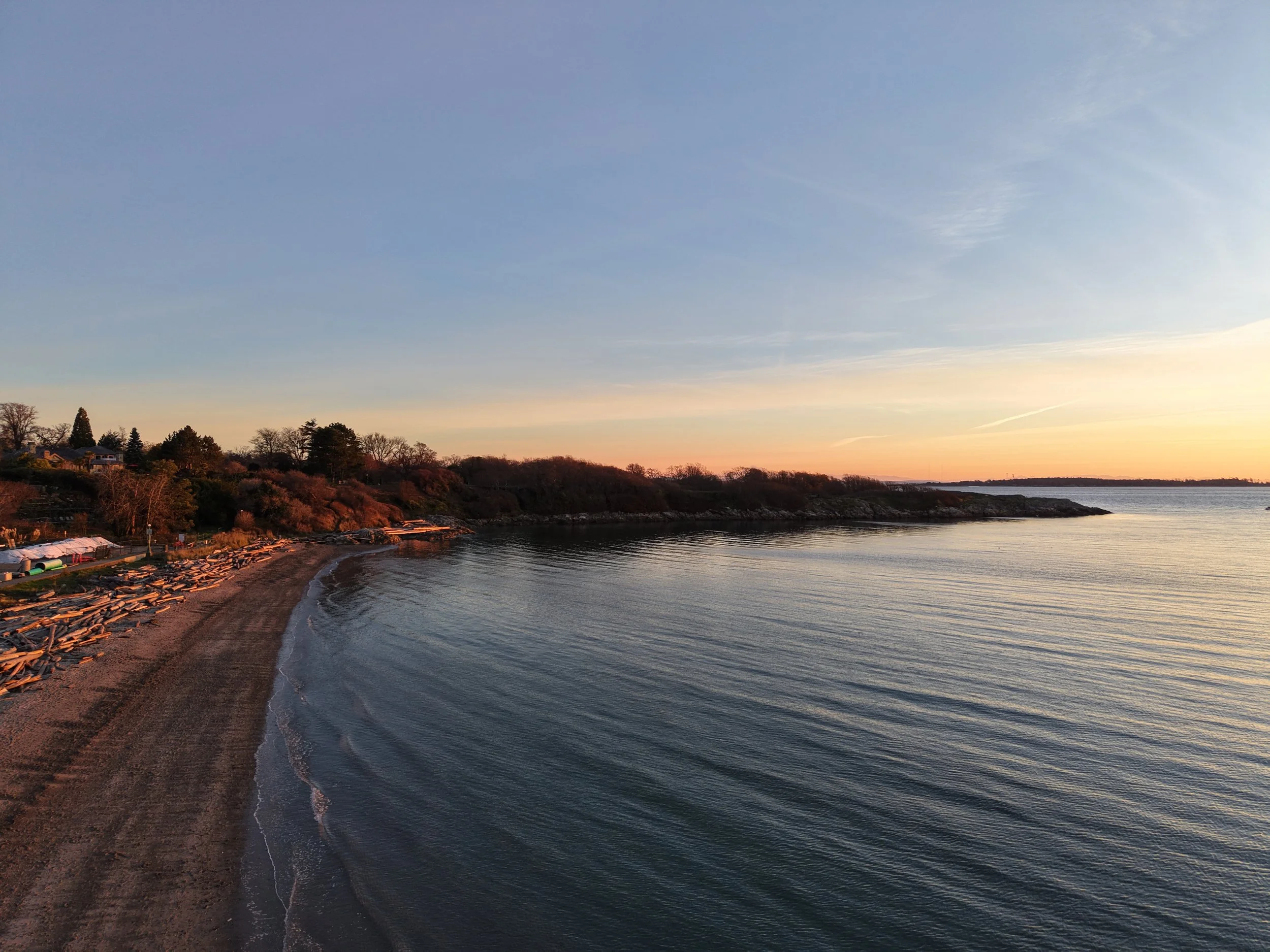
Willows Beach is one of those places that’s wired into me a little deeper than most. I filmed this short piece on a calm December morning, and while the video is only a minute and a half, the place behind it carries a lot more weight for me than I could fit into that timeline.
My family moved from Saskatoon to Victoria when I was a kid, and we ended up living about a block from Willows. For a few years there, it may as well have been our backyard. We were down at the beach constantly — bikes, skimboards, wandering up to Cattle Point, wasting time in the best possible ways. From early teens through late high school, this was one of the main places my friends and I orbit-ed around. A lot of firsts happened here too, though I’ll leave the details of those in the vault.
Even now, decades later, walking down to Willows has that strange mix of nostalgia and familiarity that only a childhood place can have. Nothing about it tries to be anything other than what it is — driftwood, a gentle shoreline, winter light that hangs low over the ocean. It’s one of the few spots in Victoria that still feels exactly the same every time you come back.
We’ve had what feels like seventy-seven straight days of rain lately, so when the weather cracked open for a morning, I threw the drone in the truck and headed straight for Willows. The calm was worth it. The shoreline looked the way I remembered it: quiet, simple, honest. The kind of morning that doesn’t need commentary to explain why it matters.
This short edit is part of a series I’ve been slowly building — quiet corners and familiar places around Vancouver Island, filmed the way they actually feel. Sometimes the stories are small, sometimes they run deep, but they all come from the same place: these are the locations that have shaped my life here.
Thanks for watching, and for following along as I get back to filming the West Coast the way I originally meant to. More Island mornings to come.
Related Stories
Two Calendar Selections — One Very Familiar Sunrise Spot
How a favorite Westshore location ended up on the Colwood community calendar.
Why I Fly at Sunrise — A West Coast Morning Ritual
The quiet rhythm and light that shape so many of my favorite flights.
Vancouver Island From Above — James Bay Athletic Association
A personal story about community, history, and the places that stay with you.
Drones in Victoria, BC: What You Need to Know Before You Fly
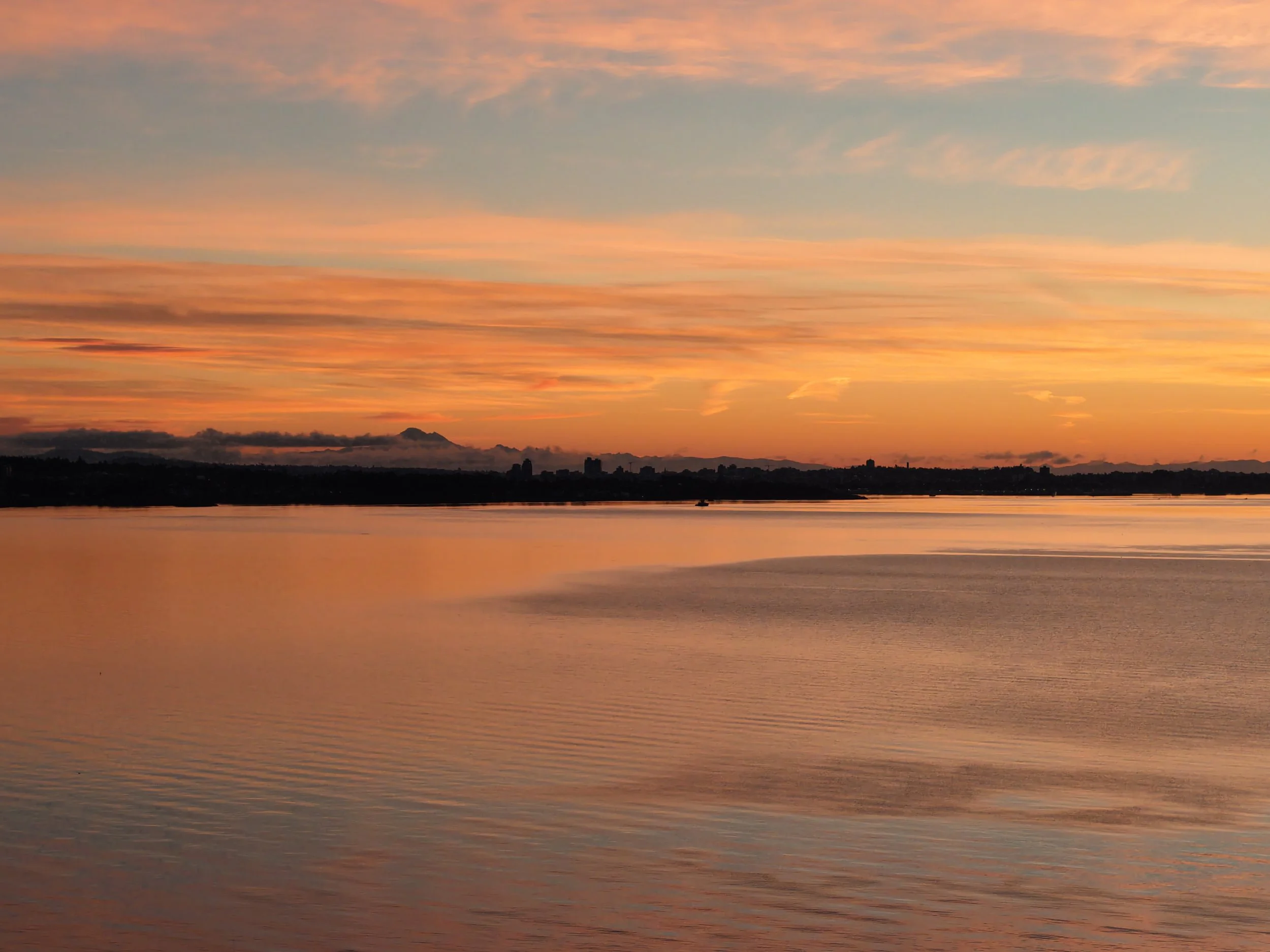

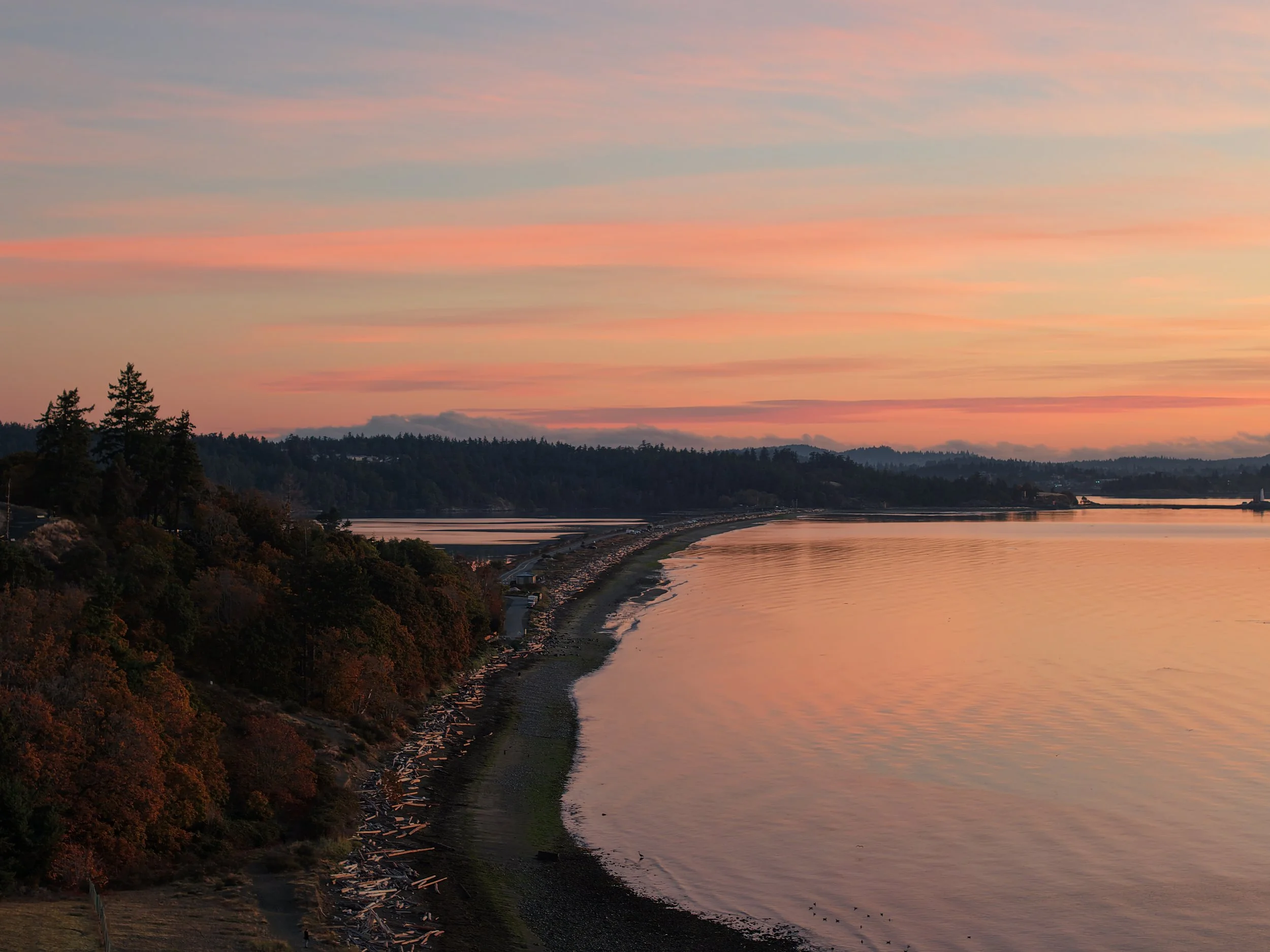
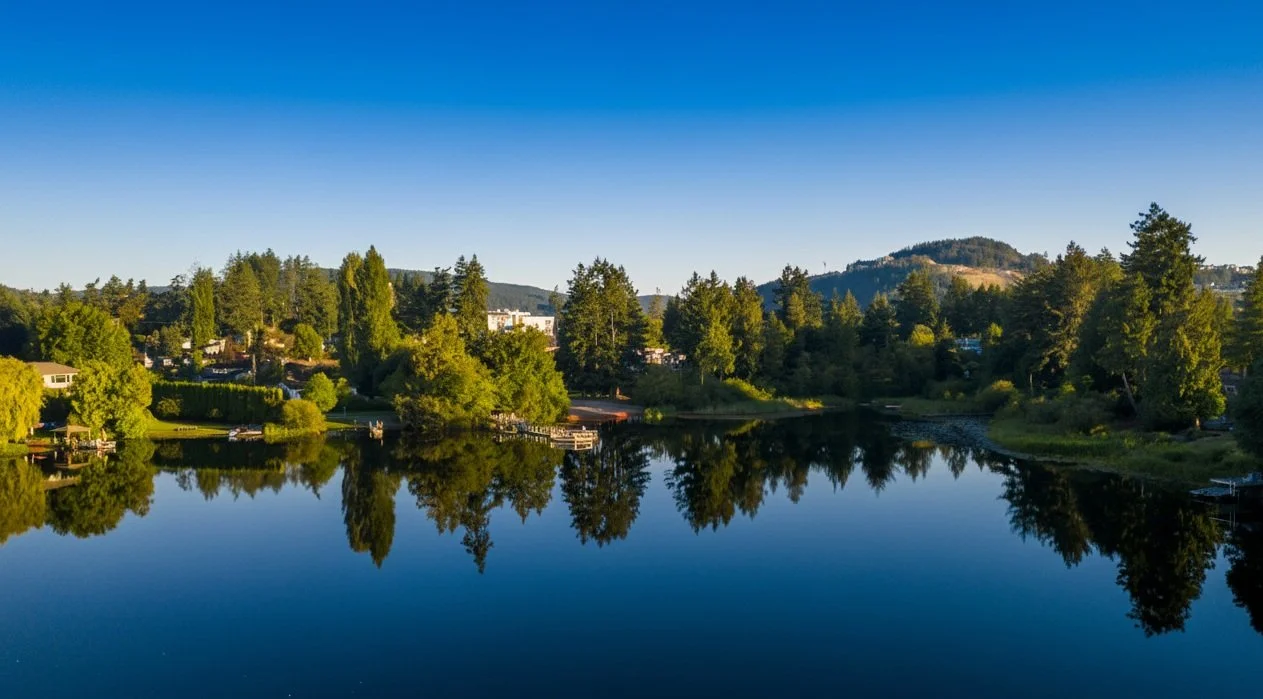
Flying a drone in Victoria seems simple enough — beaches, open water, pretty skylines, calm mornings. But Greater Victoria is one of the more complicated pieces of airspace in the country. We share the sky with floatplanes, helicopters, Coast Guard operations, military traffic, and the far-reaching footprint of YYJ.
This isn’t meant to be a lecture.
It’s just the stuff I wish more pilots knew before they take off here.
If you’re reading this because you’re considering drone work for a business, property, or project in Victoria, this complexity is exactly why many people choose to hire a professional instead of navigating it themselves.
We offer professional drone services across Greater Victoria, with clear pricing and compliant operations — so you can get the footage you need without worrying about airspace, rules, or risk. A lot of straightforward local aerial photo and video work realistically falls in the $200–$300 range, depending on the location, planning requirements, and deliverables.
1. It’s busier up there than people think — and not just with floatplanes
Most newcomers know about Harbor Air. Very few realize how many overlapping operations exist in this tiny pocket of sky:
Floatplanes — low, fast, constant.
Helijet — departures and arrivals right downtown.
Coast Guard — helicopter activity and vessel ops.
Esquimalt military airspace — restricted zones and training flights.
Medical flights — unpredictable and priority.
YYJ control zone — much larger footprint than people assume.
You’re not flying in empty sky.
Even micro drones are part of the bigger air picture.
2. Micro drone doesn’t mean micro responsibility
A 249g drone buys you flexibility, not immunity.
Micro drones can still:
injure someone
violate privacy
drift into restricted airspace
interfere with other aircraft
worry the public
If anything, smaller drones require more judgment because they get pushed around more easily by wind.
The best thing you can do for yourself (and everyone else) is at least study the rules.
Even better: get your Basic Certificate. It’s quick, and it makes every flight safer.
3. Flying over people is a no-no — with rare exceptions (and this does NOT mean filming someone who’s part of your flight)
Here’s the simple rule:
Don’t fly over uninvolved people.
“Uninvolved people” means anyone who:
doesn’t know you’re flying
hasn’t agreed to be part of your flight
is just walking the beach, trail, or sidewalk
hasn’t been briefed on what you’re doing
Flying over random strangers is a no-go, full stop.
But this often gets confused with something different:
Filming someone who is part of your operation — your kid, your partner, a friend — is fine.
ActiveTrack on your child?
Filming a friend running along the shore?
Capturing someone who knows the drone is up and is participating?
That’s allowed, as long as you do it safely and with the right drone for the job.
The quick version:
Strangers = no.
Your kid or friend who’s in on it = generally fine.
There are rare circumstances where you can fly over people, but they require licensing, planning, proper equipment, and often an SFOC. If you’re wondering whether you qualify, you probably don’t.
Keep it simple, keep it respectful, and don’t ruin it for the rest of us.
4. Weather is the biggest liar on Vancouver Island
Ground-level weather tells you almost nothing about what’s happening 30–120 metres up.
Real example from a recent flight:
It was a calm, chilly morning with barely a breeze at my feet. But as soon as the Air 3S climbed to around 100 feet, it started getting pushed around by gusts that hadn’t been noticeable from the ground. That was enough for us — we brought it down and called it.
If the weather surprises you, land.
If it feels marginal, pack it up.
There’s always another sunrise.
5. Sunrise is the easiest time to fly
Most of my flights happen around sunrise because:
fewer people
fewer aircraft
lower winds
calmer air
fewer interruptions
more respectful all around
A quiet 7 a.m. beach gives you room to breathe and make decisions without pressure.
6. Just because you can doesn’t mean you should
This is the guiding philosophy of flying in Victoria.
Lots of places are technically legal but not appropriate depending on the crowd, the noise, or what’s happening around you.
If your flight is going to bother people or draw unwanted attention, choose a different time — or a different location. Flying respectfully keeps everyone’s experience better and protects the hobby for everyone else.
7. Victoria is incredible to fly — if you treat it properly
Despite the complexity, Vancouver Island is one of the most rewarding places in Canada for aerial cinematics:
rugged, layered coastline
dramatic weather
calm pockets of morning light
historic sites
endless shoreline
accessible beauty
Treat the airspace with respect, understand the basics, and this place will reward you every time.
Fly safe. Fly early. Fly smart.
And don’t make it harder for the rest of us.
Related Stories
Hiring a Drone Pilot in Victoria, BC — What It Costs and What You Get
Straightforward pricing, what’s included, and what the process looks like if you need aerial photos, video, inspections, or a better look at something from above.
Teaching Kids to Fly a Drone (What Actually Works)
The basics that matter — where to start, what to avoid, and how to keep it fun without doing anything stupid, especially here in Canada.
DJI Neo 2 After 3 Months — Still Worth It?
What happens after the novelty wears off. Real use, real bumps, and why this thing still comes everywhere with us without even thinking about it.
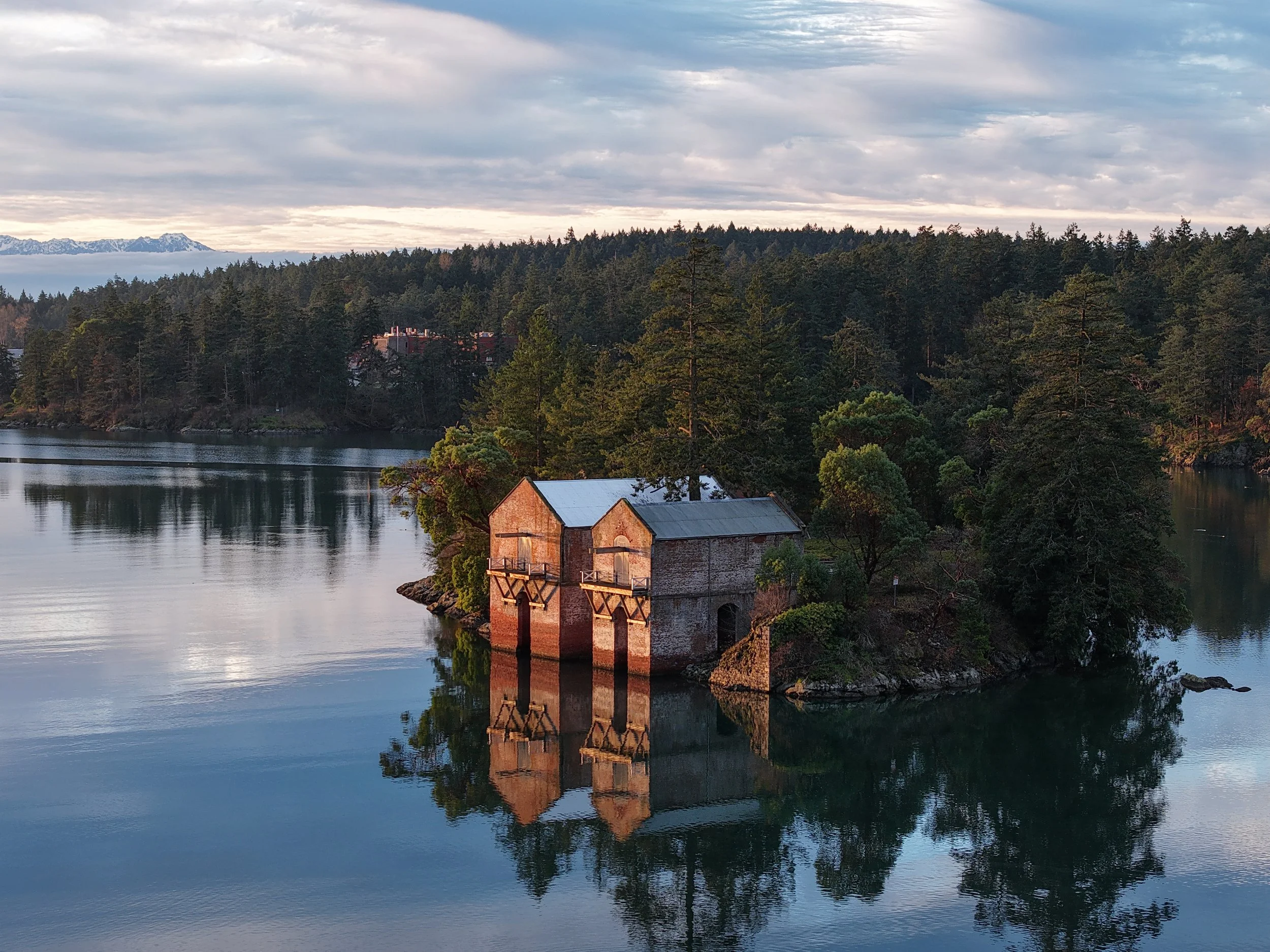
Cole Island at Sunrise – A Quiet Look at Esquimalt Harbour’s Forgotten Heritage
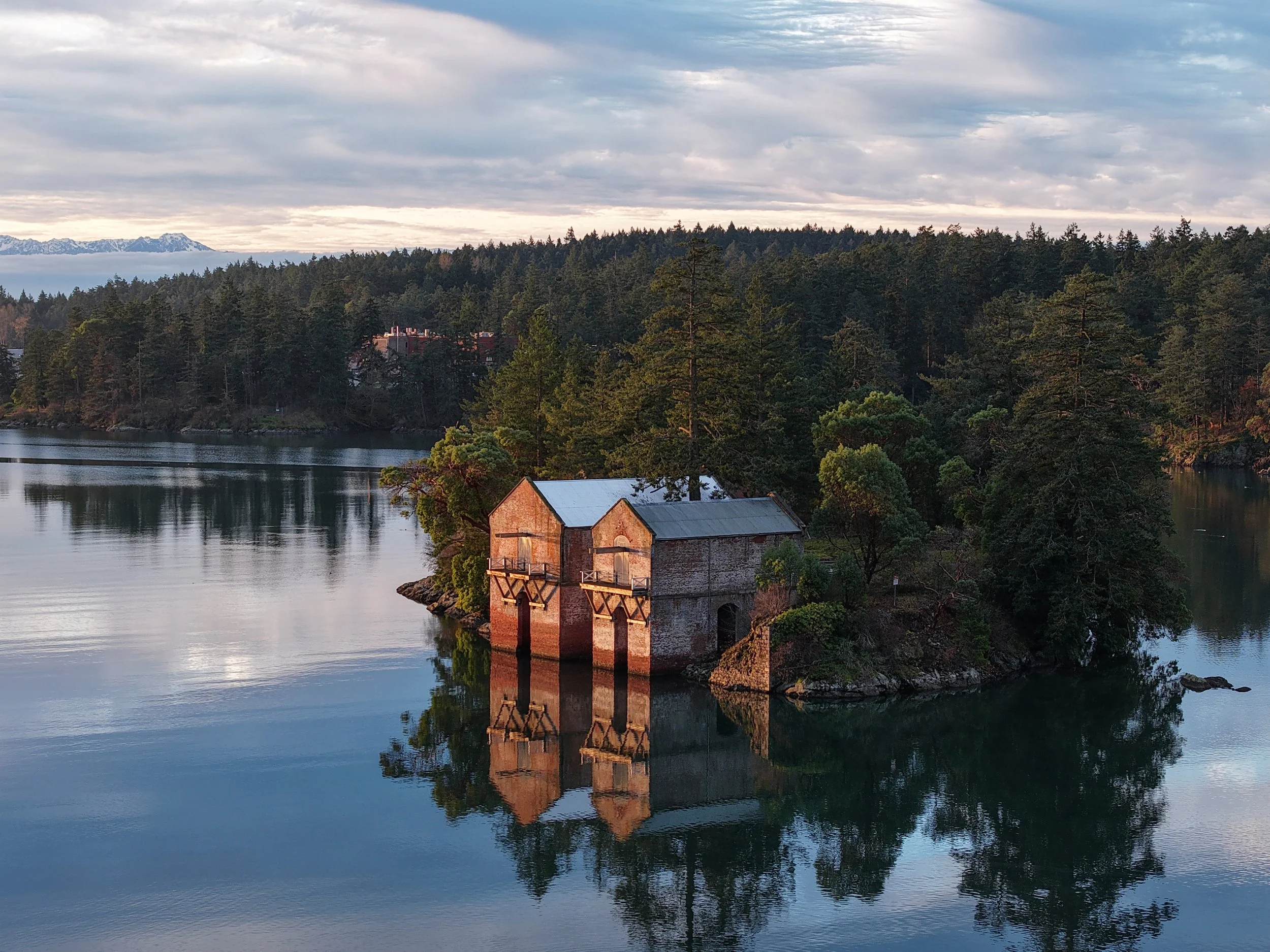
Cole Island is one of those places you see a hundred times without ever really seeing it.
If you live in Colwood or View Royal, you probably drive past it every day without a second thought. I certainly do. I can even see a corner of it from my condo and never truly understood the scale or story behind those old brick buildings on the water.
Eventually, curiosity wins.
So I took the Air 3S out on a quiet morning for a simple sunrise flight to see Coal Island from a different perspective.
Below is the video from that morning.
A Small Island With a Long Memory
Cole Island is part of a chain of small islets tucked into Esquimalt Harbor. From land you mostly see:
a single brick building
a bit of rooftop
some trees
and a shape you register only subconsciously on your commute
From the air, that picture changes.
You can see the entire complex — the rows of old munitions magazines that served first the Royal Navy and later the Royal Canadian Navy. These buildings date back to the late 1800s and early 1900s, and thanks to ongoing restoration work, they’re still standing in surprisingly good condition.
Most people don’t realize the island is publicly accessible by water. You can’t walk there, and you can’t wander inside the buildings, but kayakers and small boats often pull up on its shorelines to explore the perimeter.
It’s not a provincial park.
It’s not private land.
It’s simply one of those in-between heritage places that quietly exist until someone goes looking.
A Sunrise Flight
The morning I filmed this, the conditions were overcast but still. Not the big dramatic sunrise we sometimes get here, but something softer — that half-light glow where the water turns into a sheet of glass.
The flight itself is simple:
A low approach over the ocean
A slow rise revealing the tree line
A counter-clockwise sweep showing the brick magazines catching first light
Then a long orbit around the quiet, modern side of the island most locals never see
What struck me most is how much bigger the island feels from the air.
From land, you’d never guess the scale of those structures or that the island has multiple buildings, docks, and active maintenance.
Why This Place Matters
Cole Island is not a headline location.
It’s not a tourism magnet.
It’s not the kind of place you put on a postcard.
But that’s exactly why it matters.
It’s part of the quiet, everyday geography that shapes the Westshore — something you drive past on your way to work, something you glance at without thinking, something that quietly holds a bit of our local history.
This is the kind of place Vancouver Island Drones wants to document.
Not the obvious landmarks, but the smaller ones we’ve all half-noticed, half-forgotten.
The Start of a New Series
This video marks the first entry in Unique & Forgotten Vancouver Island — an ongoing series exploring local places that deserve a second look.
Cole Island is just the beginning.
Upcoming pieces will include:
Willows Beach at sunrise
Ogden Point mornings
Six Mile heritage shots
Aylard Farm
Parksville coastlines
And more of the small, meaningful corners of Greater Victoria
Closing Thoughts
Cole Island was never meant to be “content.”
It’s simply a place I care about because it’s part of the landscape I see every day.
If you live in the Westshore, it’s part of yours too.
Thanks for watching and reading.
More of Vancouver Island’s quiet corners coming soon.
Related Stories
Vancouver Island From Above — James Bay Athletic Association
A personal story about history, community, and the places that stay with you.
Willows Beach — A Quiet Morning on the Edge of Victoria
A calm, reflective look at one of the Island’s most peaceful shoreline spots.
Why Vancouver Island Is Perfect for Quiet Cinematic Aerial Stories
How light, texture, and solitude shape the Island’s unique visual identity.
Cole Island
Chasing Down a DJI Neo 2 for Christmas (And Why This Little Drone Matters More Than I Expected
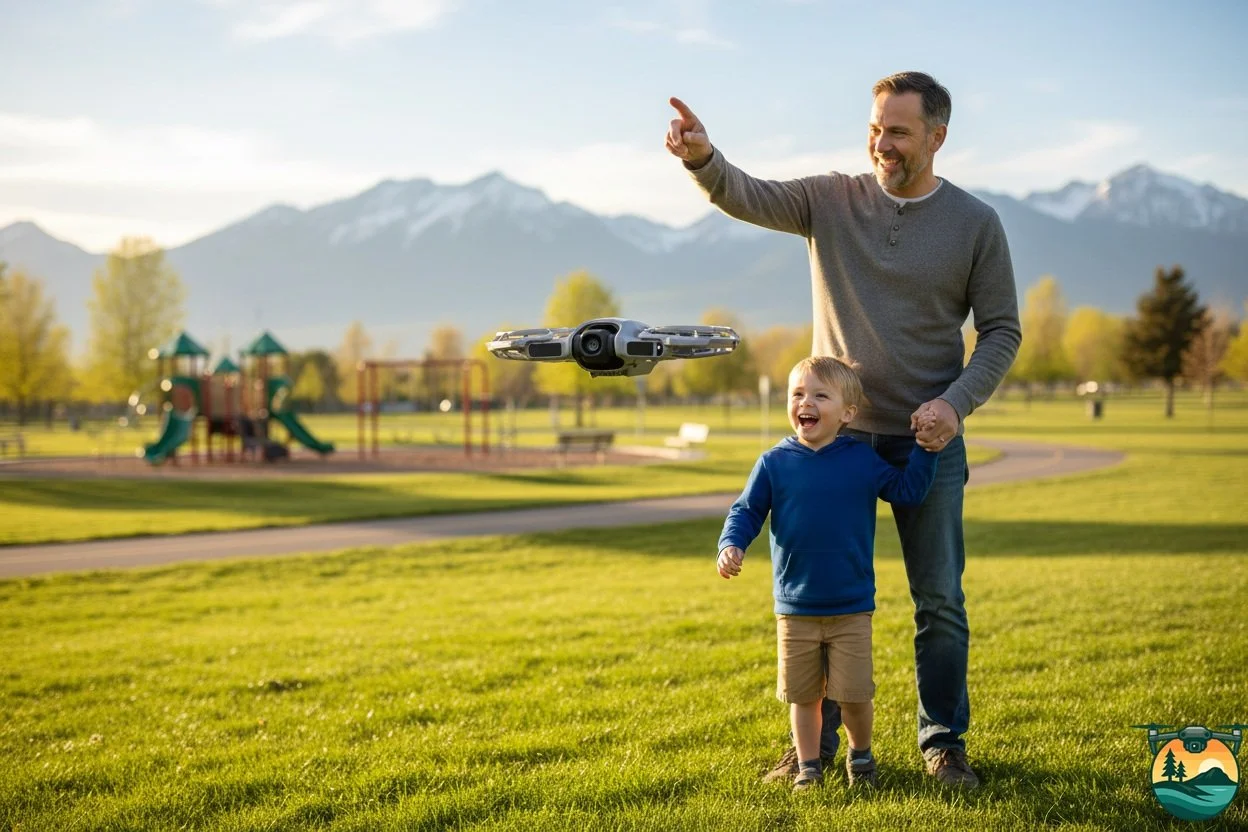
Making memories, one easy flight at a time! The DJI Neo 2 isn't just a drone; it's an invitation to spontaneous family adventures and teaching moments. So simple, even the little ones can get in on the fun!
When the first DJI Neo came out, I didn’t rush to buy it.
The camera wasn’t great, and the footage never really compared to what I get from the Air 3S. But the Neo 1 had something that did catch my attention:
they made it effortless.
No unfolding arms.
No pairing a controller.
No waiting for satellites.
No dragging out a case full of gear.
You just pulled it out of a pocket, pressed a button, and the thing followed you.
For a family that spends a lot of time outside — parks, beaches, hikes, bike trails — that kind of instant use is actually more valuable than another high-spec camera.
And when Blake started getting interested in flying, the Neo line made even more sense. Not because it was “the best drone,” but because it was simple, durable, and designed for real-world fun, not perfect cinematics.
Then the Neo 2 was announced.
Why I waited for the Neo 2 instead of grabbing the original
Everything the Neo 1 lacked, the Neo 2 seemed to fix:
better image processing
improved stability
gesture controls
voice commands
smarter tracking
stronger durability
Basically: more brains, same simplicity.
For teaching a four-year-old to fly, that combination is gold.
And for a dad who sometimes wants a drone on hand during family adventures — without opening backpacks, cases, or unfolding anything — it’s even better.
Still, actually buying one turned out to be far more complicated than expected.
The bundle circus
Once the Neo 2 arrived in Canada, it became a bundle guessing game.
I already own the DJI RC 2, which is one of DJI’s high-end screen controllers — something I use daily with the Air 3S. I had no interest in paying for the lower-end controller included in certain Neo 2 bundles. What I wanted was simple:
the drone
the extra batteries
the little transmitter
But none of the bundles offered that combination.
There was:
the bare drone
a battery bundle without the transmitter
a transmitter bundle without the batteries
and one mysterious combo that appeared briefly and vanished
Meanwhile, Christmas was getting closer, and stock kept fluctuating. The last thing I wanted was to be sitting on December 23rd refreshing product listings, hoping something magically reappeared.
So I made the practical choice:
I bought the standalone Neo 2 and will add the accessories separately.
Not elegant, but guaranteed to arrive before Christmas.
The moment that convinced me this was the right call
A coworker sent me a video of his five-year-old flying the Neo 2 indoors using nothing but gesture controls — holding out a hand, lifting a palm, catching the drone as it landed.
That clip sold me more than any spec sheet.
It wasn’t about the camera or the tracking.
It was about seeing a kid Blake’s age genuinely controlling a drone without fear.
That’s exactly the tool I want to teach him with.
This drone isn’t just for Blake — it’s for our family adventures
Yes, the Neo 2 is technically Blake’s first drone.
But realistically, it’s also something I’m going to grab on family outings where:
we didn’t plan to fly
we didn’t bring the Air 3S
we’re just outside enjoying the day
something cool happens and we want to capture it
or Blake wants to show me something he learned
The beauty of this drone is that it doesn’t require a “drone day.”
It fits into the pocket of normal life.
It’s the opposite of the Air 3S — not in quality, but in intent.
The Air 3S is for planned flights, sunrise missions, storytelling, and real cinematic work.
The Neo 2 is for:
chasing Blake at the bike park
quick follow-me shots on a hike
catching a moment without unpacking a bag
letting him fly without stress
little spontaneous adventures
Two different tools for two different kinds of days.
Final thoughts
Buying the Neo 2 took more effort than expected, but the goal never changed:
give Blake a drone he can learn on — one that’s safe, durable, and fun, and one that makes it easy for us to fly together.
And honestly, the more I’ve thought about it, the more I’ve realized:
This little drone isn’t just for him.
It’s for us.
For the spur-of-the-moment memories.
For the unplanned flights.
For the days when the Air 3S can stay at home and we just explore, with a pocket-sized drone that can keep up.
Once the weather improves, we’ll see what it can do — and I have a feeling it’ll show up in more than a few future videos, especially once Blake starts chasing me instead of the other way around.
Related Stories
Chasing Down a DJI Neo 2 for Christmas — Why This Drone Matters More Than I Expected
A father–son story about finding the right beginner drone and why the Neo 2 was the perfect fit.
DJI Neo 2: Why This Little Drone Is About to Become My Four-Year-Old’s First Co-Pilot
A closer look at how this tiny drone became the cornerstone of our safe flying lessons.
Why I Fly at Sunrise — A West Coast Morning Ritual
The calm, patient flying philosophy that shapes how I teach my son to fly.
Why Aerial Photos Get Attention: Our My-Chosen Café Shots Reach 8,000 Views
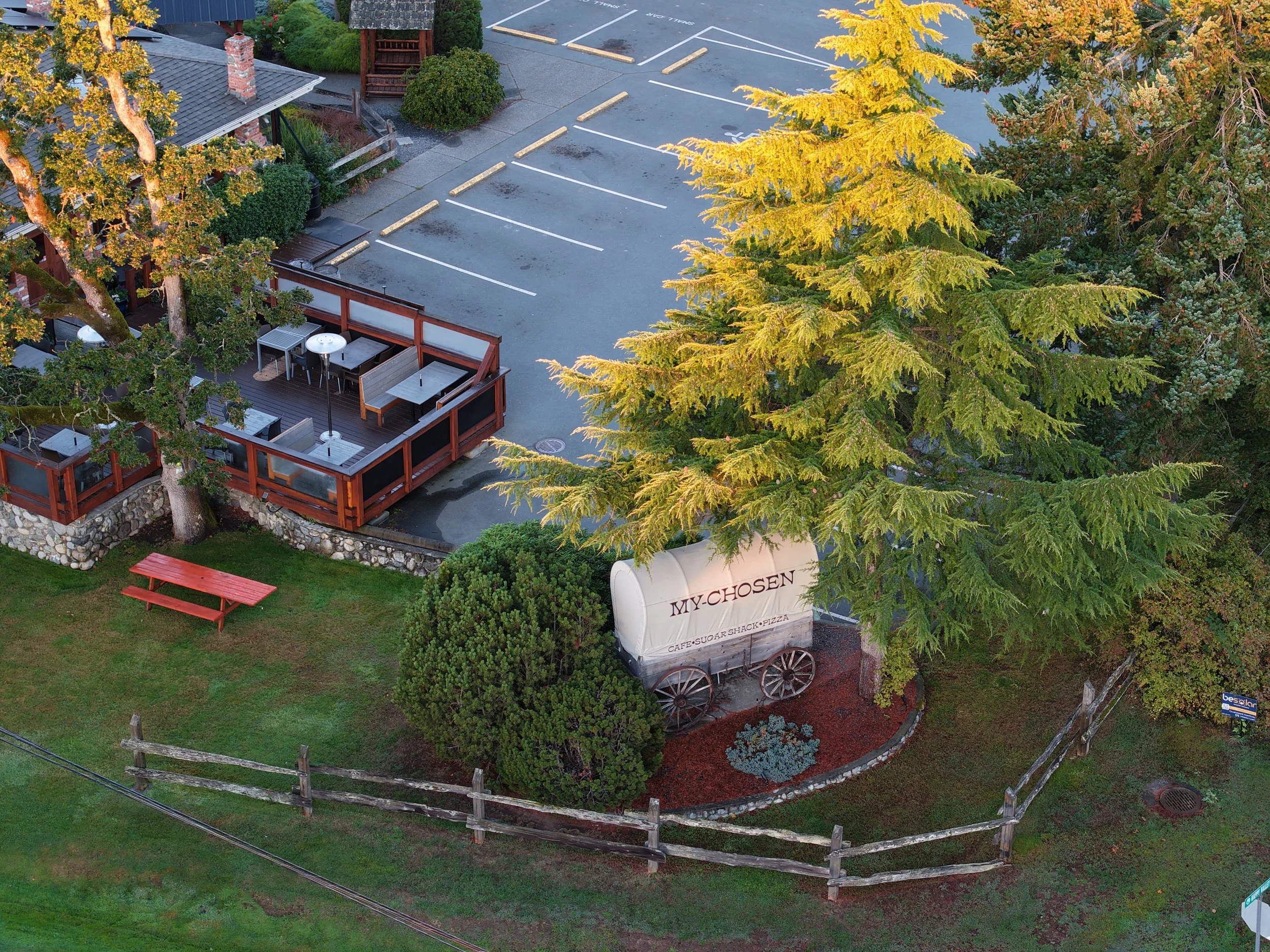
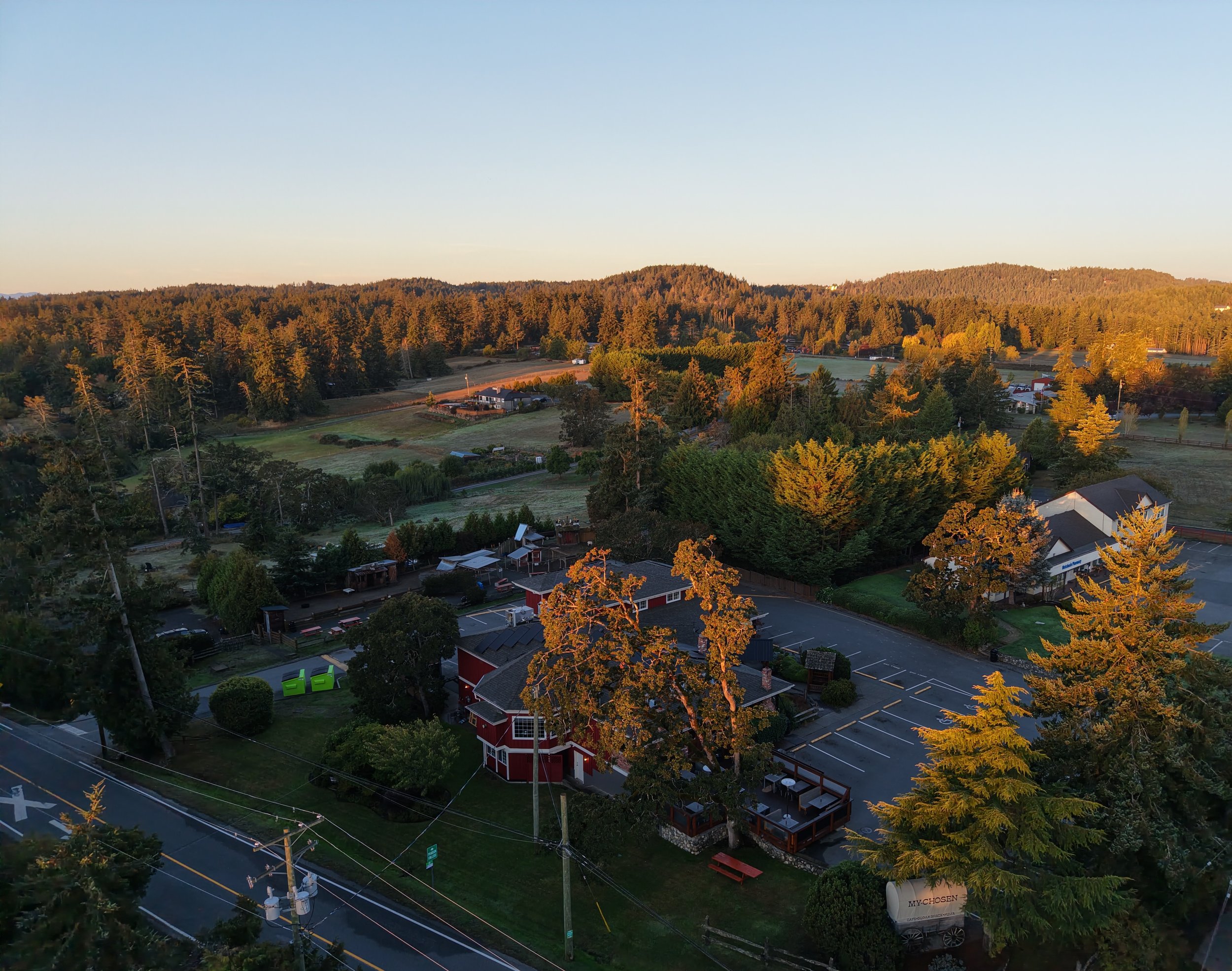
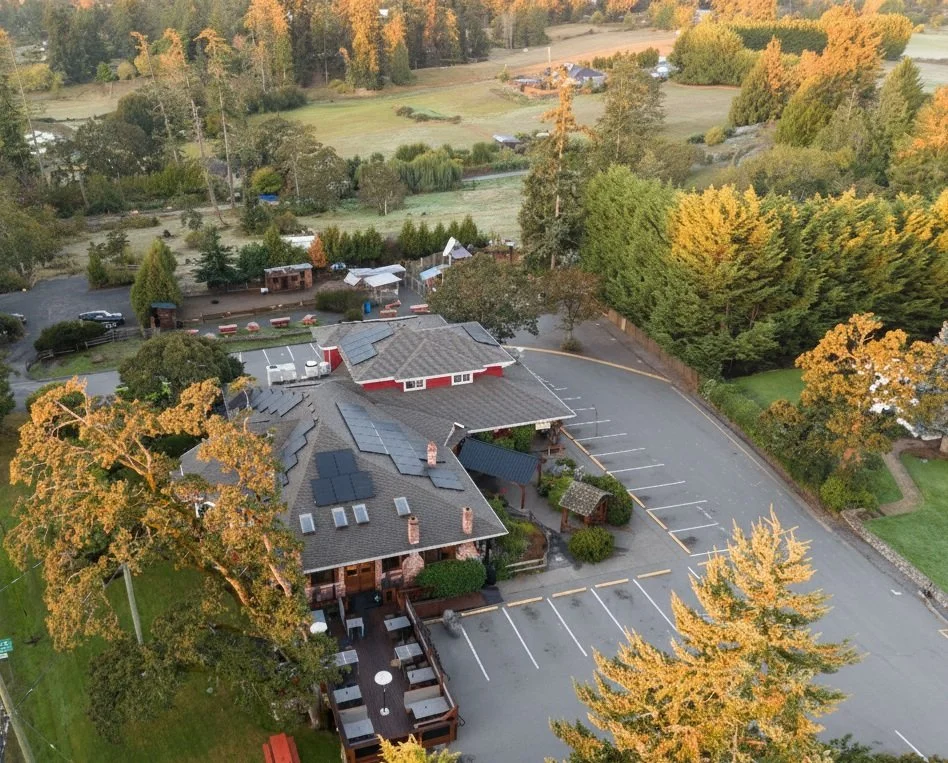
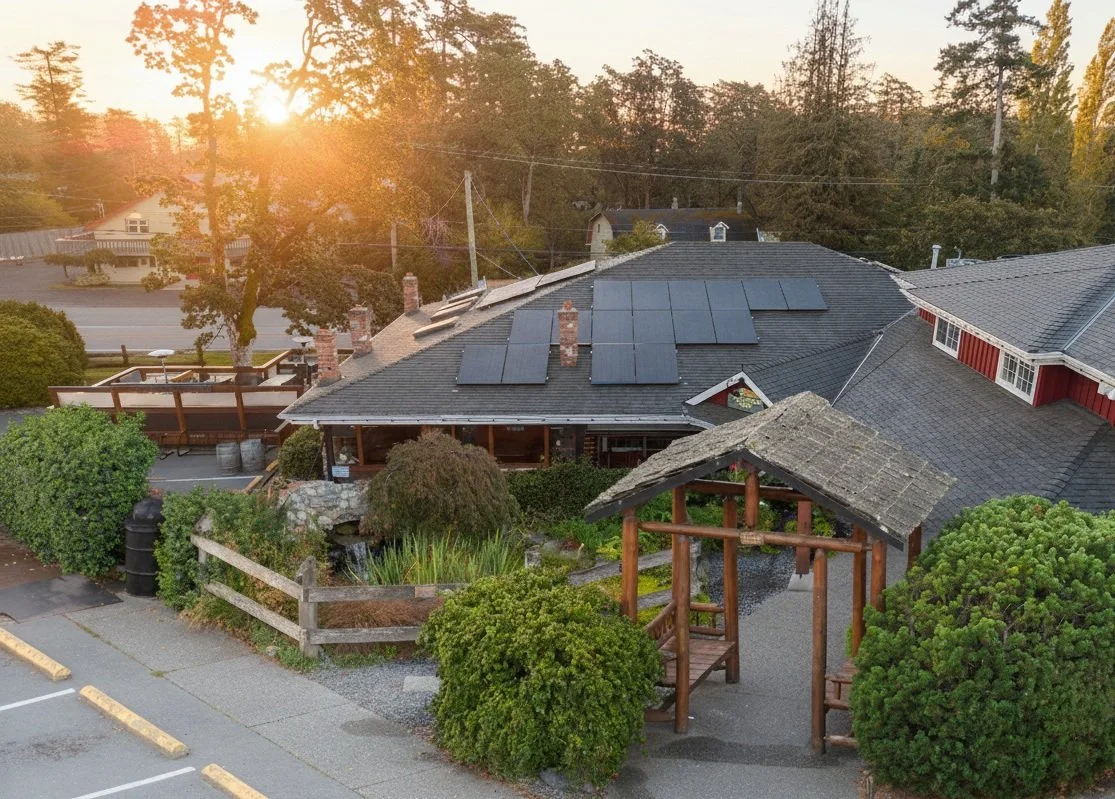
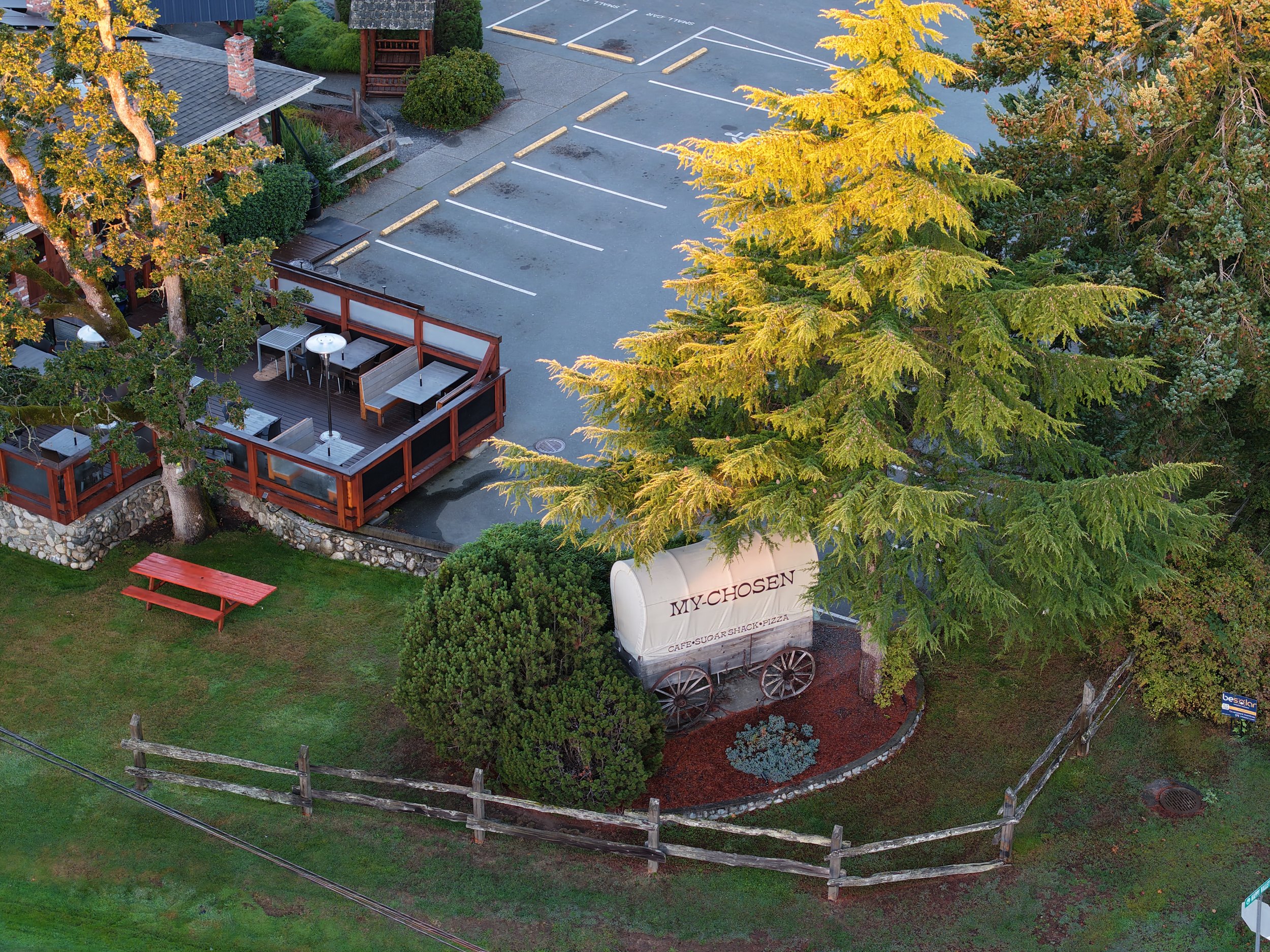
Earlier this fall, we spent a morning at My-Chosen Café, capturing a set of aerial stills of the restaurant and the surrounding countryside. I’ve been visiting My-Chosen for more than twenty years now, and it’s one of those places where the location is part of the experience. Even though I don’t live in Metchosin, the drive out — winding rural roads, open fields, coastal pockets — has always felt like a small escape.
That’s exactly why the property is such a strong fit for aerial photography. The setting already tells a story. The drone doesn’t create anything new; it simply reveals what’s already there.
Once the photos were added to My-Chosen’s Google listing, the response was clear:
several of the images quickly passed 8,000 views each.
For a local restaurant, that kind of steady engagement stands out. And it highlights something we see over and over again:
Most businesses already have hundreds of customer photos taken at eye level — selfies, snapshots, phone pictures at the table.
What they don’t have is a view from above.
Aerial photos offer a perspective no one ever sees in real life, and that alone makes people stop and look. The numbers back it up.
That’s one of the real strengths of aerial media. For a relatively small amount of work, you end up with evergreen content that keeps showing up where customers are already looking. A single strong image can quietly accumulate thousands of impressions on Google Maps without anyone boosting it or promoting it.
The team at My-Chosen was incredibly receptive and enthusiastic throughout the process, which made the shoot easy and genuinely enjoyable. When a place already has character, history, and a setting like theirs, the visuals almost build themselves.
If you're a local business owner in the Westshore or Greater Victoria area and you're curious what a new perspective might do for your visibility online, we’re always open to a conversation. Sometimes all it takes is showing your location from a different angle.
Related Stories
Why I Fly at Sunrise — A West Coast Morning Ritual
How early light, calm air, and quiet spaces shape safer, more intentional flights.
Teaching Kids to Fly Drones — Fun First, Safety Always
A simple, practical look at introducing young pilots to safe micro-drone flying.
Victoria — Why Everything Starts With a Conversation
How clear expectations and honest communication make local flying smoother for everyone.
Vancouver Island Drones vs. The Pacific Ocean Falling From the Sky
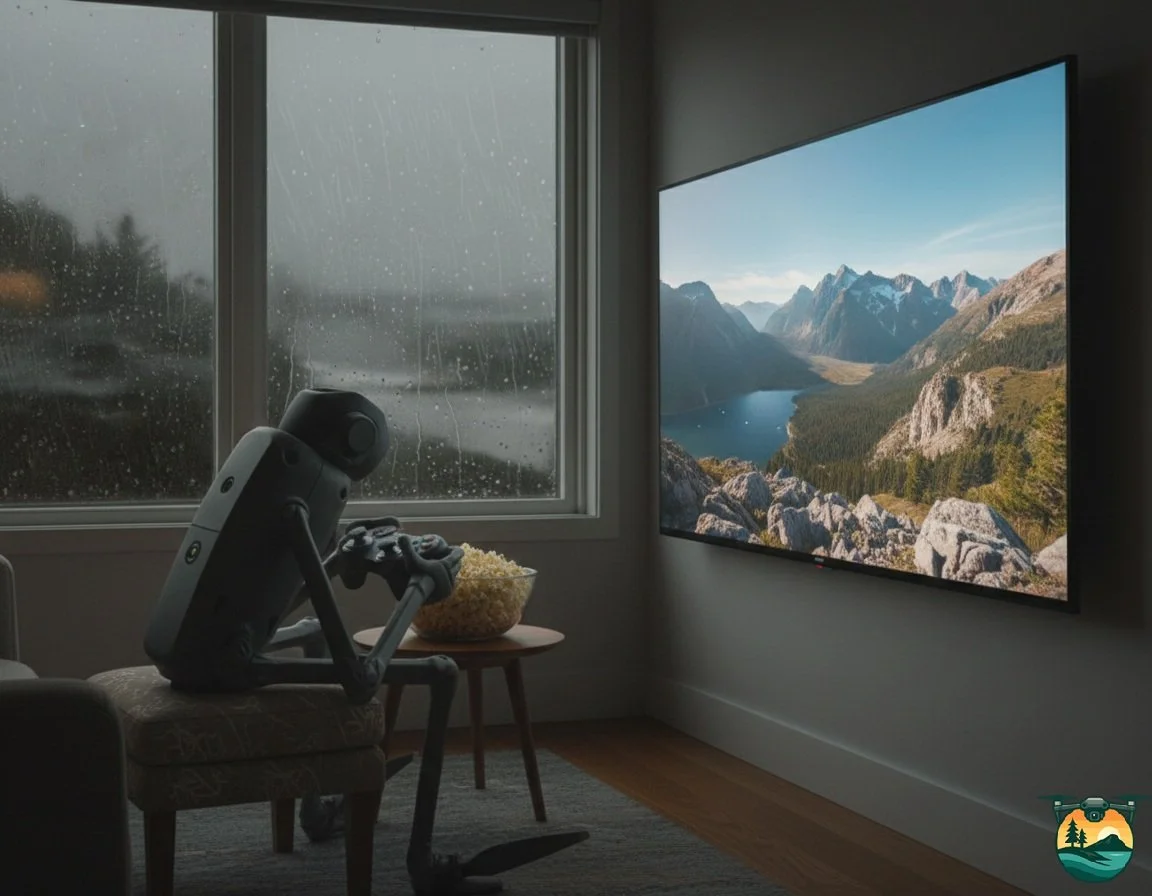
When the rain’s coming down sideways for the third week straight, even Gizmo gives up on flying and settles in for a bit of wish-fulfillment. Nothing like watching other people enjoy blue skies while the Island tries to merge with the Pacific.
I don’t know if we’re in an atmospheric river, an atmospheric waterfall, or whatever new name they’ve invented this year, but it has been biblically pouring rain on Vancouver Island since the end of summer. It hasn’t let up. It hasn’t even taken a lunch break. The sky has basically been dumping a full season’s worth of water on us every single day, and my DJI Air 3S has now entered its window-watching era.
That’s what it looked like this morning—Gizmo (yes, the drone finally has a name) standing on the ledge, legs out, props up, staring through the raindrops like a dog that desperately wants to go outside but knows it’ll be miserable the second it does. If drones had facial expressions, Gizmo would have been giving me the same look Blake gives me when I tell him we can’t go to the playground because everything’s soaked.
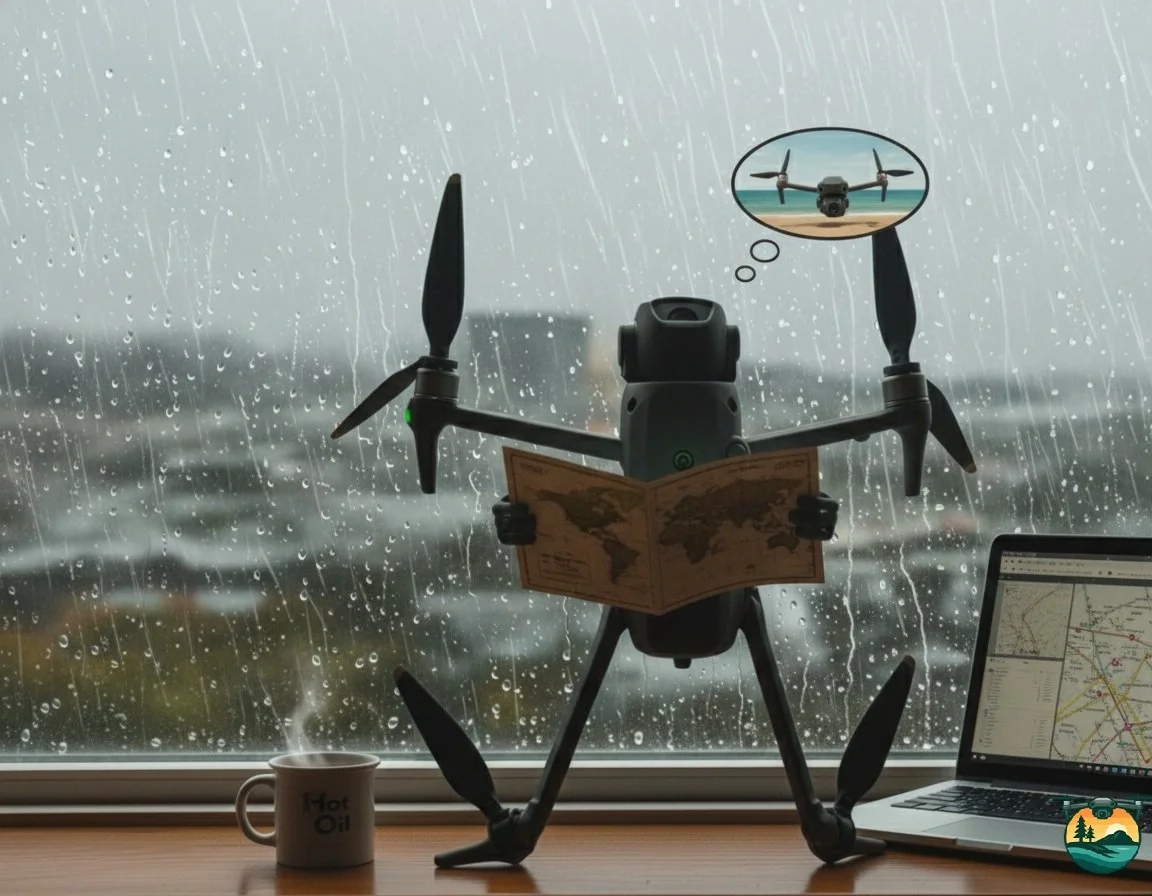
When the rain hasn’t stopped since August, even Gizmo starts daydreaming about warm beaches and dry skies. Stuck inside with a map, a mug of “Hot Oil,” and nothing but atmospheric rivers outside the window, it’s officially vacation-fantasy season on Vancouver Island.
And that’s the thing about flying here. We always pretend we can just wait out the weather, but waiting out Vancouver Island rain is like waiting for a toddler to “calm down on their own.” You’re going to be there a while. Every time the rain slows down, the wind picks up. Every time the wind relaxes, the fog rolls in. You start questioning whether the idea of “flying conditions” is even real or just something people in Alberta made up.
Honestly, you get used to it. You tune your batteries, make another coffee, glance out the window every fifteen minutes, and hope for a six-minute break in the sky where you can squeeze a flight in before the next wave hits. This time of year, that’s all you get—a few stolen minutes, and then the Pacific comes crashing down again.
The good news is the payoff is coming. January and February here are some of the clearest, crispest flying months you get all year. Perfect light, perfect air, gorgeous visibility. When that hits, the Air 3S is getting launched out the door so fast it won’t even remember its rainy little existential crisis by the window.
Until then, we’re just trying to stay dry like the rest of the Island.
Related Stories
Chasing Down a DJI Neo 2 for Christmas — Why This Drone Matters More Than I Expected
A father–son story about finding the right beginner drone and why the Neo 2 was the perfect fit.
DJI Neo 2: Why This Little Drone Is About to Become My Four-Year-Old’s First Co-Pilot
A closer look at how this tiny drone became the cornerstone of our safe flying lessons.
Why I Fly at Sunrise — A West Coast Morning Ritual
The calm, patient flying philosophy that shapes how I teach my son to fly.
DJI Mini 5 Pro: If It’s Not a Micro Drone… What’s the Point?

Even drones have cheat days. The Mini 5 Pro stepping on the scale is basically me after Thanksgiving — trying to convince everyone it’s “just the batteries.”
Let’s talk about the DJI Mini 5 Pro, because depending on who you ask, it’s either the perfect evolution of the Mini line… or a confused little chonker that wandered into the wrong weight class. And honestly, for a drone that’s supposed to be “lightweight,” it sure has sparked a lot of conversations about the one thing it absolutely shouldn’t be flirting with: breaking the sub-250g barrier.
The entire reason the Mini series exists — the whole identity of the line — is that glorious micro-drone freedom. Sub-250g means fewer rules, fewer restrictions, less paperwork, and more places you can legally fly without Transport Canada tapping you on the shoulder. That’s the magic. That’s the appeal. That’s why people buy these things.
But here’s the part that DJI hopes slips under the radar: the Mini 5 Pro is coming in overweight in multiple countries. Not “my scale’s off” overweight — I mean regulators outright refusing to classify it as a micro drone. The UK didn’t classify it as micro. Parts of the EU didn’t. Australia didn’t. New Zealand didn’t. And DJI has already quietly tweaked their own packaging and marketing language, which is never a great sign.
And look — trust me when I say I’m in absolutely no position to judge anything for being a little overweight. I’m walking around with a full-time dad bod myself. But even I know when something is carrying too much for its weight class.
So now we’ve got a drone still being marketed like a Mini, but being treated more like a “tiny adult drone” in several countries. And that’s a problem. Because if you lose the micro-drone advantage, you lose the whole reason to even consider a Mini in the first place. If I’m going to deal with more restrictions anyway, I’d rather fly something with bigger sensors, better stability, longer flight times, better low-light performance — you know, something with real muscle behind it.
And that leads to the obvious question: if the Mini 5 Pro isn’t reliably a micro drone, then… what’s the point? Why would you buy it? It’s priced high enough that it’s not “cheap and cheerful,” and without micro classification it suddenly sits in the same regulatory neighborhood as drones that absolutely outperform it.

Which brings me to my actual opinion: if I were buying a Mini right now, I wouldn’t buy the Mini 5 Pro. Not a chance. I’d buy the DJI Mini 4 Pro without even thinking twice about it.
The Mini 4 Pro is still everything a Mini is supposed to be. It’s a proper micro drone. It has excellent collision avoidance, a very capable camera, a mature and stable platform, and as of now it’s a fantastic deal. Most importantly, it still gives you the legal freedom that Micro drones are meant to deliver — and for a lot of recreational and travel flyers, that freedom is the whole game.
The Mini 5 Pro, on the other hand, feels like it’s having an identity crisis. It’s feature-packed and extremely capable, but if it’s not actually giving you the micro-drone benefits, then you’re paying a premium for something that doesn’t deliver the one thing the Mini line is famous for.
Is the Mini 5 Pro a good drone? Absolutely. But is it the smarter buy for most people in Canada right now? Not in my books. Not when the Mini 4 Pro exists, and not when the Mini 5 Pro’s entire legal advantage is up in the air — literally and figuratively.
So here’s where I land: if you want performance, skip the Mini 5 Pro and get something beefier. If you want the freedom that Mini drones are supposed to give you, get the Mini 4 Pro. And if you want something fun, tiny, and perfect for a four-year-old to boss around with voice commands, we’ve got the NEO 2 coming for exactly that purpose.
But the Mini 5 Pro? Until DJI sorts out this whole weight-class rollercoaster, it’s stuck in a weird middle zone that doesn’t make a lot of sense — especially if you’re flying in Canada and want simplicity.
Vancouver Island Drones — independent, local, and not affiliated with DJI or anybody else. Just calling it like it is, dad bod and all.
Related Reads
DJI Neo 2 After 3 Months — Still Worth It?
What happens after the novelty wears off. Real-world use, plenty of abuse, and why this little drone still keeps getting used.
DJI Neo 2 After One Month — Insane Value, Easy to Use, and Surprisingly Tough
A month of real use with the Neo 2 — gesture controls, tracking, crashes, kids, and why it turned out to be such an easy drone to recommend.
Flying a Drone in Victoria, BC — Local Rules, Airspace, and Practical Tips
A practical look at flying around Victoria, including the airspace, local quirks, and what you actually need to think about before putting a drone in the air.
DJI NEO 2: Why This Little Drone Is About to Become My Four-Year-Old’s First Co-Pilot
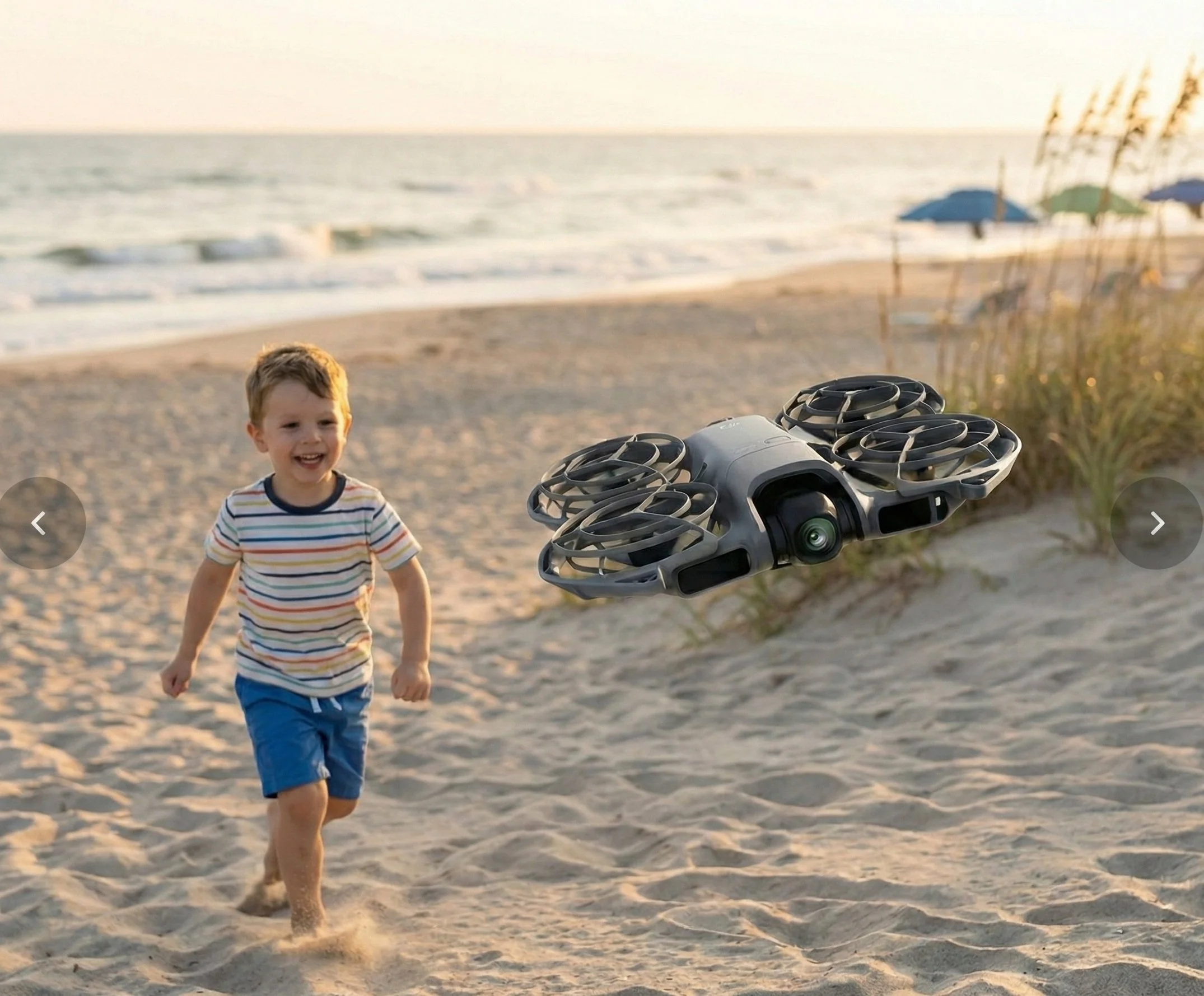
Pocket-sized drone, big memories. This is why we wanted the NEO 2
The DJI NEO 2 has a ridiculous amount of capability for its size and price, and that’s exactly why I’m picking one up. I’m not buying it to replace anything in my current setup or to compete with the prosumer drones I fly for work. I’m buying it because it’s the perfect first drone for my four-year-old son, and because the NEO 2 brings a mix of features that make it fun, safe, and actually worth using on our family adventures.
For starters, the voice and gesture controls are perfect for a kid. Blake can literally talk to the drone. He can wave at it. He can tell it to go up or come back, and the drone actually listens. That’s a pretty incredible way to teach a young kid how flight works without throwing them into full manual controls right away. It removes all the friction and makes learning feel natural. The follow-me tracking is another big deal for us. Blake is four and full throttle all the time, whether he’s running around the playground, riding his bike, tearing down a trail, or just being a maniac in the backyard. Being able to pull a drone out of my pocket, speak a command, and have it track him while he zooms around is unbelievably convenient, and it gives us shots we could never get otherwise without firing up bigger gear.
The NEO 2 also brings real safety features, which matter when you’re teaching a kid. You get full obstacle sensing, palm takeoff and landing, and the kind of durability that means a bump or two isn’t the end of the world. The original NEO already had a reputation for surviving “oops” moments, and everything about the NEO 2 suggests they’ve improved that even further. I want Blake to learn without worrying that every mistake is going to cost me a fortune, and this drone makes that possible.
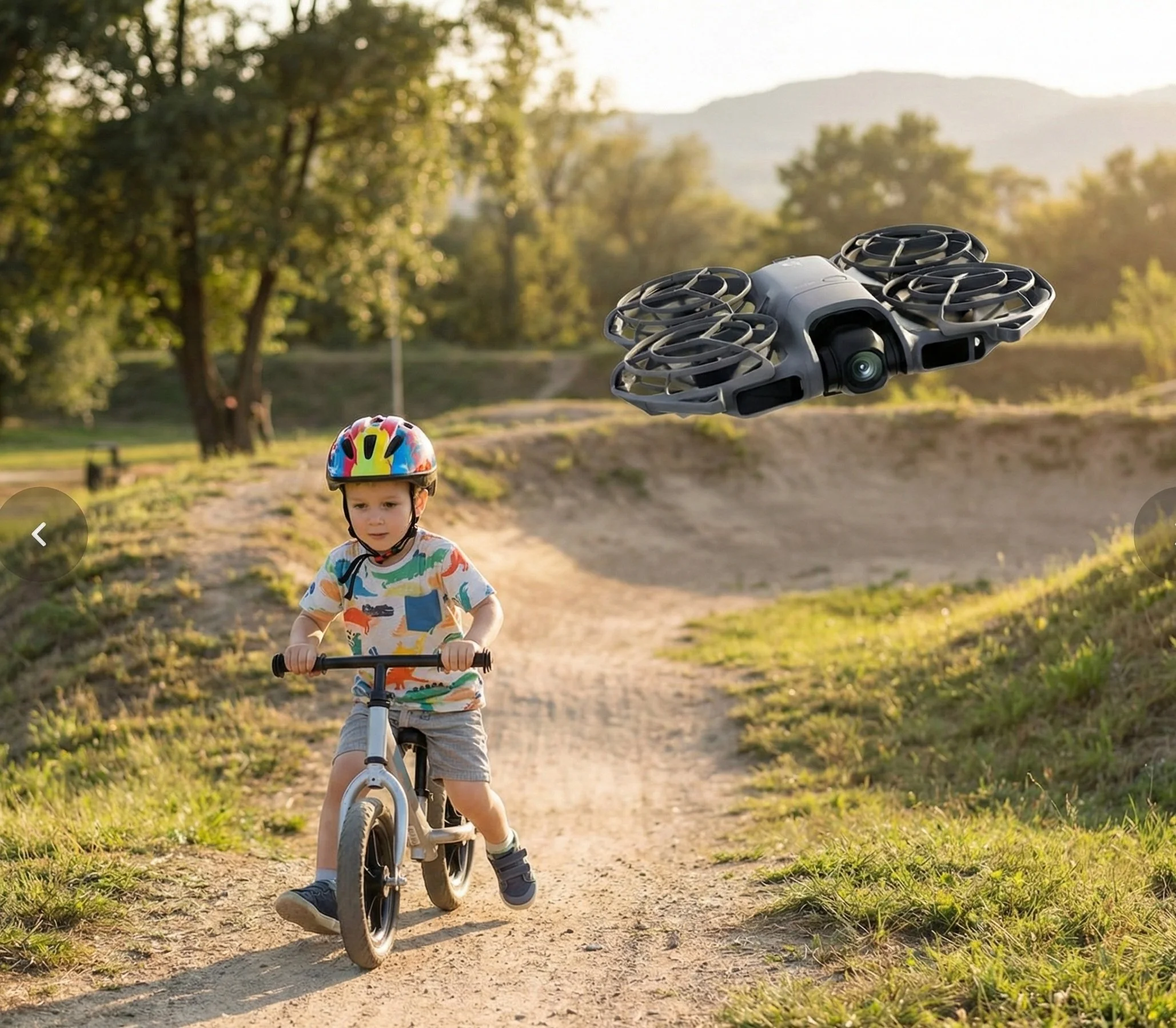
Teaching the next generation of pilot — one ride at a time.
Then there’s the camera. For the size and price, 4K video up to 60fps (and even 100fps in certain modes) is honestly wild. No, this isn’t meant to replace a prosumer drone for paid aerial work, but that’s not what we’re using it for. This is for family clips, quick moments on a trail, spontaneous shots on a beach, and, most importantly, documenting Blake learning to fly. It’s more than good enough for YouTube, social media, and the kind of personal content we create together.
This little drone is going to be a huge part of our upcoming long-format YouTube series where I teach Blake to fly. That’s something we’ve talked about for a long time, and the NEO 2 is the perfect tool for it. It’s simple enough for a kid, smart enough to avoid disasters, and capable enough to capture footage that still looks great. We’re going to get plenty of behind-the-scenes moments, lots of teaching clips, and a ton of genuine father-son content out of it. It fits our workflow and our brand perfectly.
The bottom line is that for the price, the DJI NEO 2 is an absolute no-brainer if you’re a parent who flies drones and wants to bring your kid along for the ride. It’s fun, it’s safe, it’s capable, and it opens the door for kids to learn in a way that feels exciting instead of intimidating. For us, it’s going to be a great teaching tool, a great storytelling tool, and a great little drone to have in our pocket when Blake and I head out on our next adventure.
Related Stories
Chasing Down a DJI Neo 2 for Christmas — Why This Drone Matters More Than I Expected
A father–son story about finding the right beginner drone and why the Neo 2 was the perfect fit.
DJI Neo 2: Why This Little Drone Is About to Become My Four-Year-Old’s First Co-Pilot
A closer look at how this tiny drone became the cornerstone of our safe flying lessons.
Why I Fly at Sunrise — A West Coast Morning Ritual
The calm, patient flying philosophy that shapes how I teach my son to fly.
What Canada’s 2025 Drone Regulations Mean for Everyday Flyers
Transport Canada has now rolled out its full wave of drone regulation changes for 2025, with the April updates long behind us and the November rules newly in effect. There’s been a lot of noise online about what all this means, and most of it either oversells the changes or completely misses the point. So here’s the simple version, from someone who actually flies on Vancouver Island constantly, in real weather, real airspace, around real people, at real hours of the morning when most of the Island is still asleep and the only witnesses are gulls and the occasional deer.
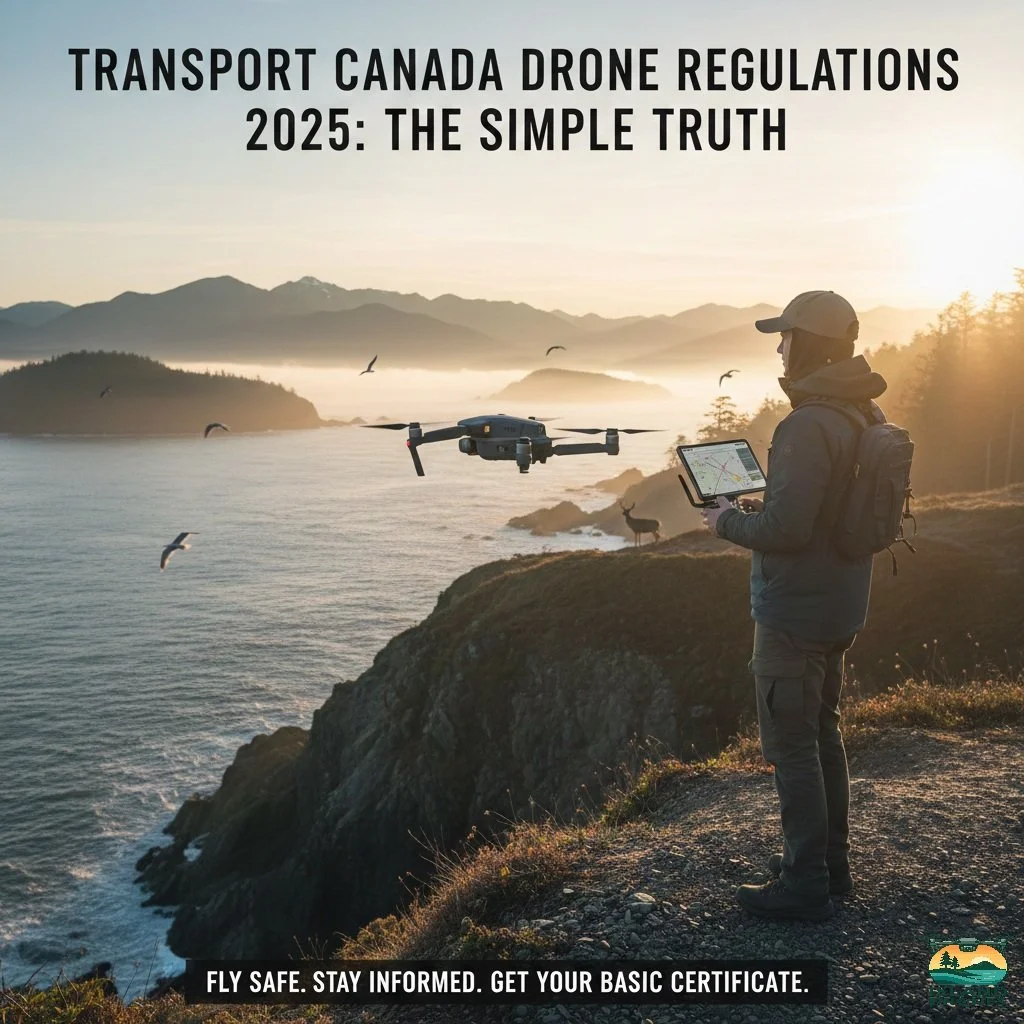
The new rules essentially break down into two categories: administrative changes that happened back in April, and more meaningful operational changes that arrived in early November. The April side of things handled restructures like new exam tracks and the operator certificate (RPOC) framework. The November update was the one that actually affected flying — adding defined categories for extended visual line of sight (EVLOS), low-risk beyond line of sight allowances, sheltered operations, and some clearer boundaries for medium-sized drones. NAV Drone updated to match, with new flight type options and more precise authorization pathways. If you’re an advanced pilot, none of this is scary or confusing. If you’ve been treating drone rules like an optional suggestion, it probably feels overwhelming.
And that brings me to my one opinion that hasn’t changed in years: every single person who flies a drone in Canada should get the Basic Certificate. I don’t care if you’re flying a $200 toy or a $5,000 rig — the Basic exam teaches you things you absolutely need to know. The rules in Canada are not intuitive. You cannot tell by looking whether you’re in controlled airspace. You cannot “just guess” whether your location is safe, or whether you’re accidentally over bystanders, or what altitude restrictions actually apply to the terrain you’re on. You won’t magically know that migratory bird sanctuaries are off-limits. You won’t instinctively understand NOTAMs or heliport radiuses or how weather interacts with your drone’s sensors. These things must be learned, and the Basic Certificate is designed to teach exactly that.
It costs ten bucks. That’s literally it. Ten dollars and an hour or two of studying using completely free resources. It’s the easiest, cheapest way to prevent yourself from being the pilot who ruins it for everyone else. Almost every time someone confronts me while I’m flying — even when I’m following every rule — it’s because they had a previous bad experience with someone who didn’t know what they were doing. Those pilots are the reason regular fliers like me get questioned, yelled at, or lectured about rules we’re already following. If more new pilots took the Basic exam, there’d be fewer incidents, fewer complaints, and a lot less drama on beaches and boardwalks.
As for advanced pilots, the 2025 changes don’t rewrite your world, but they do matter. If you’re flying commercially, the new categories make your planning more structured whether you’re staying within VLOS, using EVLOS with a spotter, or exploring any of the newly defined operation types. It’s still the same job, but with clearer paperwork and expectations. What hasn’t changed is that you’re expected to be competent, current, and aware of the rules — something that honestly should’ve always been the baseline.
And just to clear up one last thing I see confusing people online: not every new drone is an “upgrade.” The Air 3S is still my primary tool. It’s my cinematic camera, the one I trust for commercial flights and the drone that handles Vancouver Island wind and light properly. The new Neo 2 is fun, impressive for the price, and fantastic for kids — especially for follow-me shots and early training — but it’s not a replacement for a real cinematic aircraft. It lives in a totally different category, and that’s how it should be.
So here’s the bottom line. Canada tightened the rules this year, not to make life harder for pilots, but to make the sky safer and more predictable as drones become more common. If you fly, you owe it to yourself and everyone around you to understand the basics. Get the Basic Certificate. Or at the very least, study the exact material for it so you know what’s legal, what isn’t, and how not to accidentally end up being “that pilot” who becomes the reason someone tries to ban drones from another park.
If you treat the airspace with respect, it treats you well back — and you get to keep enjoying the freedom of flying on this island without unnecessary headaches. And honestly, that’s worth a lot more than ten bucks.
Related Stories
Why I Fly at Sunrise — A West Coast Morning Ritual
How early light, calm air, and quiet spaces shape safer, more intentional flights.
Teaching Kids to Fly Drones — Fun First, Safety Always
A simple, practical look at introducing young pilots to safe micro-drone flying.
Victoria — Why Everything Starts With a Conversation
How clear expectations and honest communication make local flying smoother for everyone.
Our Favorite Camping Spot in Parksville


We snuck away to Parksville for the long weekend — a little family adventure on the stat. Technically, I got “called into the office,” but when your office has ocean views, warm light, and soft sand under your shoes, you don’t argue.
This was our fourth stay at The Beach Club Resort, which we now proudly call our favourite “camping spot” on Vancouver Island. The joke started last summer when we abandoned an actual campsite and ended up here instead. We’ve refined our camping setup so well now that we can camp comfortably any time of year… mostly because our gear includes a beachfront suite, comfy beds, and an in-suite laundry. Roughing it, Westshore edition.
The beach was quiet that morning — low tide stretching forever, soft light coming over the ocean, the kind of peaceful moment that hits a little differently on a holiday where most people take time to reflect. We weren’t there for Remembrance Day specifically, but it’s why we were wearing poppies on a beach instead of rushing anywhere else. A calm moment, a beautiful place, and a reminder of how lucky we are to live where we do.
Blake, of course, made a beeline for the giant playground next door (the best on the Island if you ask him), and we spent the rest of the morning doing what we always do here — walking the boardwalk, taking it slow, appreciating this little stretch of Vancouver Island that somehow feels different every time we visit.
I flew a little, as I always do. Parksville never disappoints. Even on a quiet November morning, the place shows off like it’s peak summer.
We’ll be back in December for Christmas — same favourite “campsite,” same routine, same view we never get tired of.
Vancouver Island Drones — independent, family-run, and always grateful to explore places like this.
Related Stories
Why I Fly at Sunrise — A West Coast Morning Ritual
How early light, calm air, and quiet spaces shape safer, more intentional flights.
Teaching Kids to Fly Drones — Fun First, Safety Always
A simple, practical look at introducing young pilots to safe micro-drone flying.
Victoria — Why Everything Starts With a Conversation
How clear expectations and honest communication make local flying smoother for everyone.
Between Atmospheric Rivers: View Royal to Victoria in Six Minutes of Sunshine
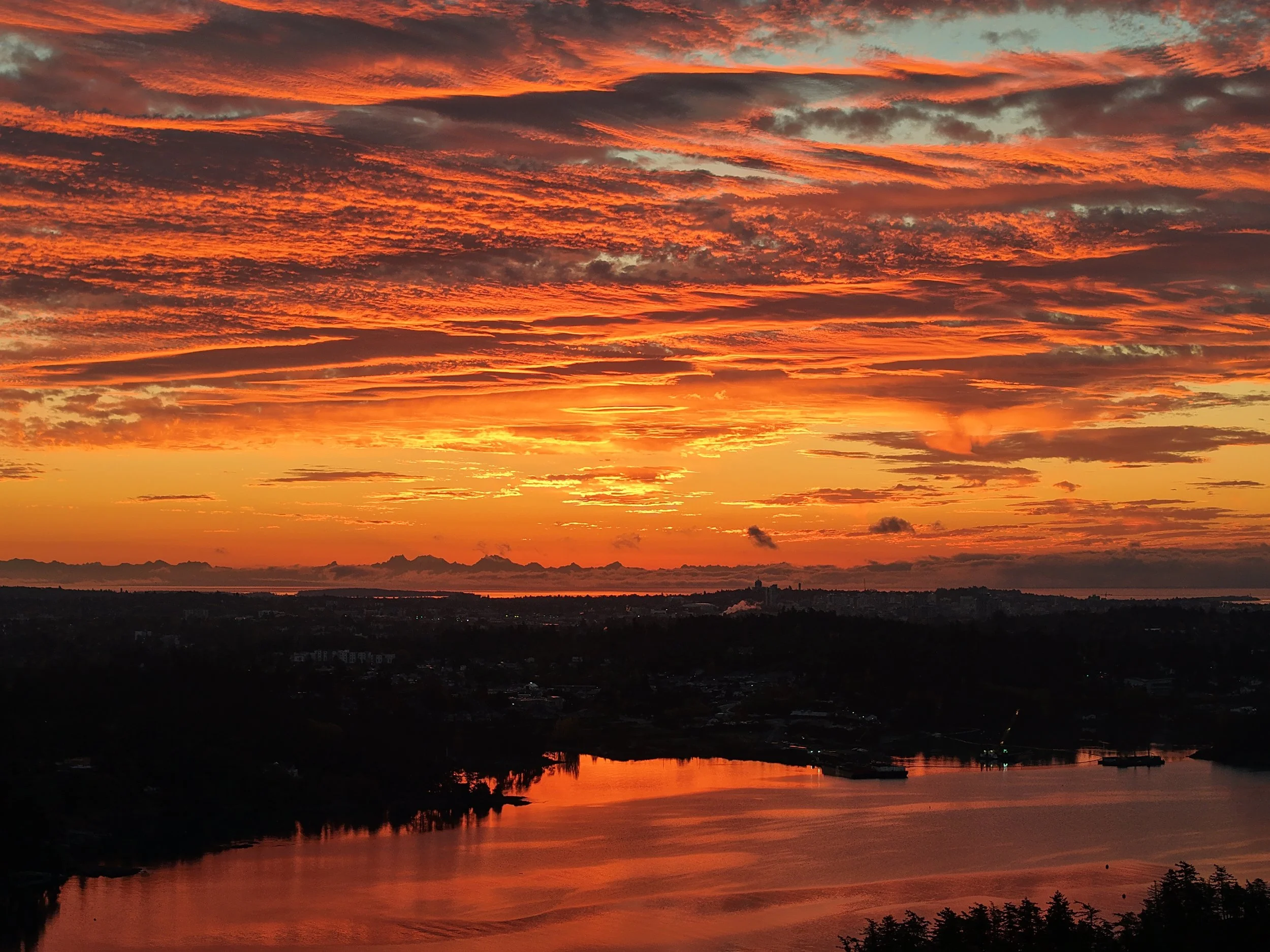

You know those breaks in the weather that make you question whether you imagined the last two weeks of rain? That was last week.
One moment it’s dumping sideways, the next — blue sky. And not just blue sky, but that golden glow that makes the entire West Coast look like it’s auditioning for a travel ad. I had about six minutes before the next atmospheric river came barreling through, so I did what any rational adult would do: ran to the parking lot with the drone like it was a fire drill.
From up there, View Royal looked unreal. The clouds were splitting open, light spilling through onto Esquimalt and downtown Victoria, the ocean catching every bit of orange reflection. It’s one of those rare moments where you’re not just filming — you’re kind of standing there, half-laughing, half-freezing, trying to believe you live somewhere this moody and beautiful.
And yes — before anyone asks — no filters, no ND, no presets. We were raw-dogging it. Straight sensor to sky, baby. Sometimes you just have to let the glass and the light do the talking.
I didn’t plan this flight, didn’t prep anything, didn’t even bring gloves. It was supposed to be another “meh” weather day. But that’s the West Coast — it’ll drown you for a week, then give you five minutes that remind you exactly why you stay.
The Air 3S did its thing, the light did the rest, and by the time I landed, the next wave of rain was already moving in from the Strait. Timing: 10/10. Fingers: frozen. Battery: worth it.
Sometimes the best flights don’t come from road trips or fancy locations — they happen in the parking lot outside your own front door, between storms, when you decide to ignore common sense and fly anyway.
(Captured from View Royal, looking toward Esquimalt and downtown Victoria. West Coast skies — unpredictable, dramatic, and occasionally polite enough to pose for six minutes.)
Vancouver Island Drones – still grounded, but not for long.
Related Stories
Why I Fly at Sunrise — A West Coast Morning Ritual
How early light, calm air, and quiet spaces shape safer, more intentional flights.
Teaching Kids to Fly Drones — Fun First, Safety Always
A simple, practical look at introducing young pilots to safe micro-drone flying.
Victoria — Why Everything Starts With a Conversation
How clear expectations and honest communication make local flying smoother for everyone.
Chilly Sunday Sunrise at Royal Bay Beach
Another chilly West Coast Sunday morning, another reason to pull over at Royal Bay Beach.
You know that kind of sunrise that makes you forget you’re holding a coffee, because your fingers are too busy freezing off while you fumble for the drone controller? Yeah — one of those mornings.
The sky was glowing bright orange, the tankers were parked offshore like they’d reserved front-row seats, and Victoria was just starting to wake up. Couldn’t resist taking the Air 3S out for a few shots — mostly just to justify why I was up this early on a Sunday.
And sure enough, the universe has a sense of humor — same guy, same truck, same parking spot as the last time I came down here. At this point, we might as well start a Royal Bay Beach sunrise club. Great guy, knows all the local history, and somehow always beats me to the beach.
It’s always nice running into locals like that — just two people watching the light hit the water, pretending it’s not freezing, and pretending this isn’t slowly becoming a habit.
Beautiful morning, beautiful shots, great conversation. If every early-morning flight turned out like this, I’d stop pretending I hate getting up early.
Vancouver Island Drones — still grounded (but never for long).
Related Stories
Why I Fly at Sunrise — A West Coast Morning Ritual
How early light, calm air, and quiet spaces shape safer, more intentional flights.
Teaching Kids to Fly Drones — Fun First, Safety Always
A simple, practical look at introducing young pilots to safe micro-drone flying.
Victoria — Why Everything Starts With a Conversation
How clear expectations and honest communication make local flying smoother for everyone.
Good Morning, My-Chosen Café — A Sunrise Worth Waking Up For


There’s something timeless about My-Chosen Café.
It’s the kind of place that hasn’t needed to reinvent itself in twenty years — because it never had to. Horses in the fields, coffee on the porch, and that classic Metchosin quiet that somehow feels like home even if you’re just passing through.
For me, it’s more than a local landmark. I’ve been coming here for over two decades — long before drones, cameras, or aerial photography ever became part of my life. So when the chance came to finally capture this spot from above, I knew it wasn’t just another shoot. It was personal.
The Flight
We lifted off just before sunrise, when the first light was brushing the tops of the trees but the sun hadn’t yet crested the hills. The café sat calm and still, lights warm against the morning blue.
As the drone rose above the treeline, the entire landscape opened up — the fields, the winding Metchosin roads, and the distant ocean beginning to catch the reflection of the rising sun. From that height, you can see why My-Chosen Café feels like the heart of this little pocket of Vancouver Island.
The video sequence starts at the front of the restaurant and slowly climbs through the trees — and then, like nature’s cue, the horizon ignites. The sky goes from deep blue to gold in seconds, the kind of light you can’t fake or predict.
Why We Fly
This shoot was a reminder of why we do what we do at Vancouver Island Drones. It’s not just about capturing pretty pictures — it’s about documenting the stories, the businesses, and the moments that make the Island feel alive.
Every café, every job site, every sunrise — they all tell part of the bigger story of this community. And sometimes, all it takes is a few minutes in the air to see it differently.
Want to Show Off Your Location?
If you run a restaurant, resort, or local business with a setting worth sharing, we’d love to help you showcase it from above. Whether it’s the early-morning calm or the full buzz of your busy hours, aerial footage can tell your story in a way that connects instantly.
Related Stories
Why I Fly at Sunrise — A West Coast Morning Ritual
How early light, calm air, and quiet spaces shape safer, more intentional flights.
Teaching Kids to Fly Drones — Fun First, Safety Always
A simple, practical look at introducing young pilots to safe micro-drone flying.
Victoria — Why Everything Starts With a Conversation
How clear expectations and honest communication make local flying smoother for everyone.
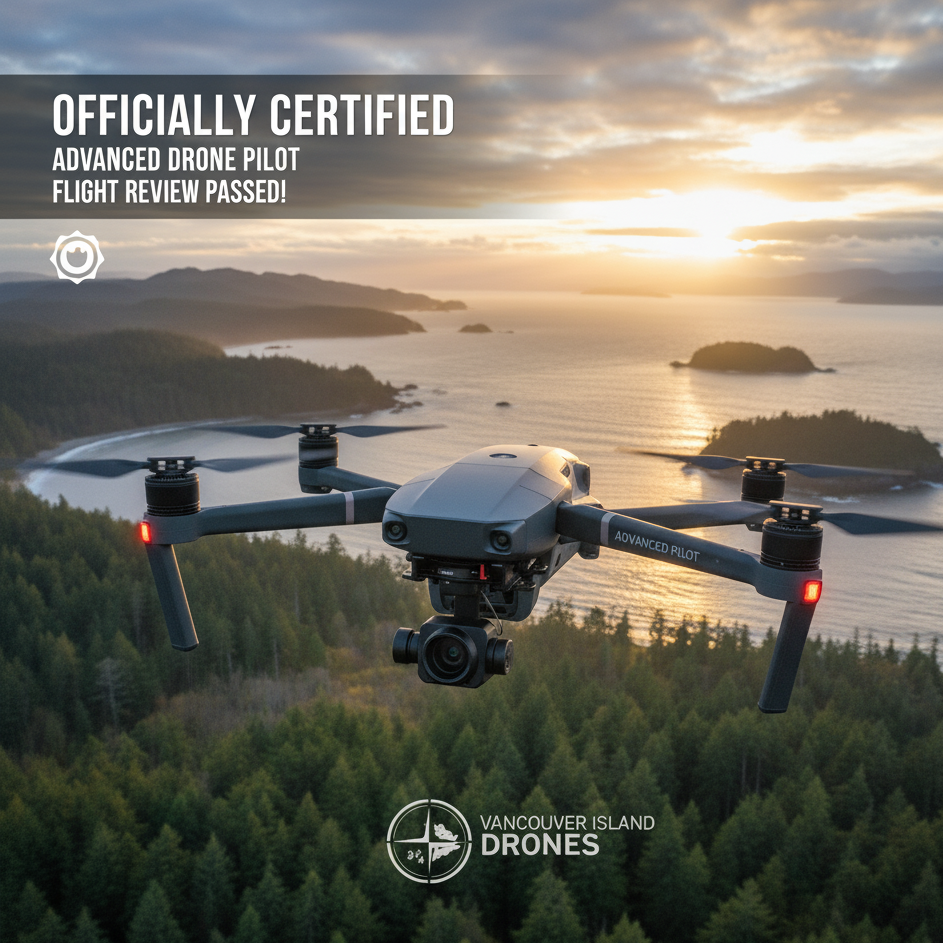
I Passed My Advanced Flight Review
Well, that’s it. The box is ticked, the paperwork is filed, and the hi-viz vest has sweat stains to prove it: I officially passed my Transport Canada Advanced Flight Review.
For anyone who hasn’t been down this rabbit hole, the Advanced is what separates the “flying a toy in the park” crew from the people who can actually work in controlled airspace without Transport Canada knocking on the door. It’s the big kid license.
What did it take? A pile of prep. Site survey scripts memorized like bad karaoke lyrics (CARs 901.27, anyone?). Emergency procedures on loop in my head — lost link, fly-away, the whole “call Nav Canada before your heart rate hits 200” routine. And yes, cones, launch pad, fire extinguisher, first aid kit — the whole portable circus stuffed in the back of the car.
Then there’s the actual review: fifteen minutes of proving you can keep your drone in sight, call your own takeoff/landing like you’re hosting a morning radio show, and convince a flight reviewer you’re not about to fly into a 737 on final. Sounds simple. It isn’t.
But here’s the thing: I passed. Which means Vancouver Island Drones can now operate at the level I’ve been aiming for — advanced airspace, higher-stakes projects, and the kind of credibility you can’t fake.
Am I suddenly Captain Professional? No. I’m still the same Westshore dad with a drone addiction, only now I’ve got Transport Canada saying, “Alright, you know your stuff, go play in the big leagues.”
What’s next? Logging some serious airtime on the DJI Air 3S — getting hours, honing skills, and putting that new license to work on construction, hospitality, and conservation flights right here on the Island.
For today though? I’m just celebrating. Advanced in the bag. Lord of the Wings (the Air 3S) still humming. Vancouver Island Drones moving up a rung.
We get up early in the Westshore… so you don’t have to.
— Ryan, Vancouver Island Drones
Related Stories
Why I Fly at Sunrise — A West Coast Morning Ritual
How early light, calm air, and quiet spaces shape safer, more intentional flights.
Teaching Kids to Fly Drones — Fun First, Safety Always
A simple, practical look at introducing young pilots to safe micro-drone flying.
Victoria — Why Everything Starts With a Conversation
How clear expectations and honest communication make local flying smoother for everyone.
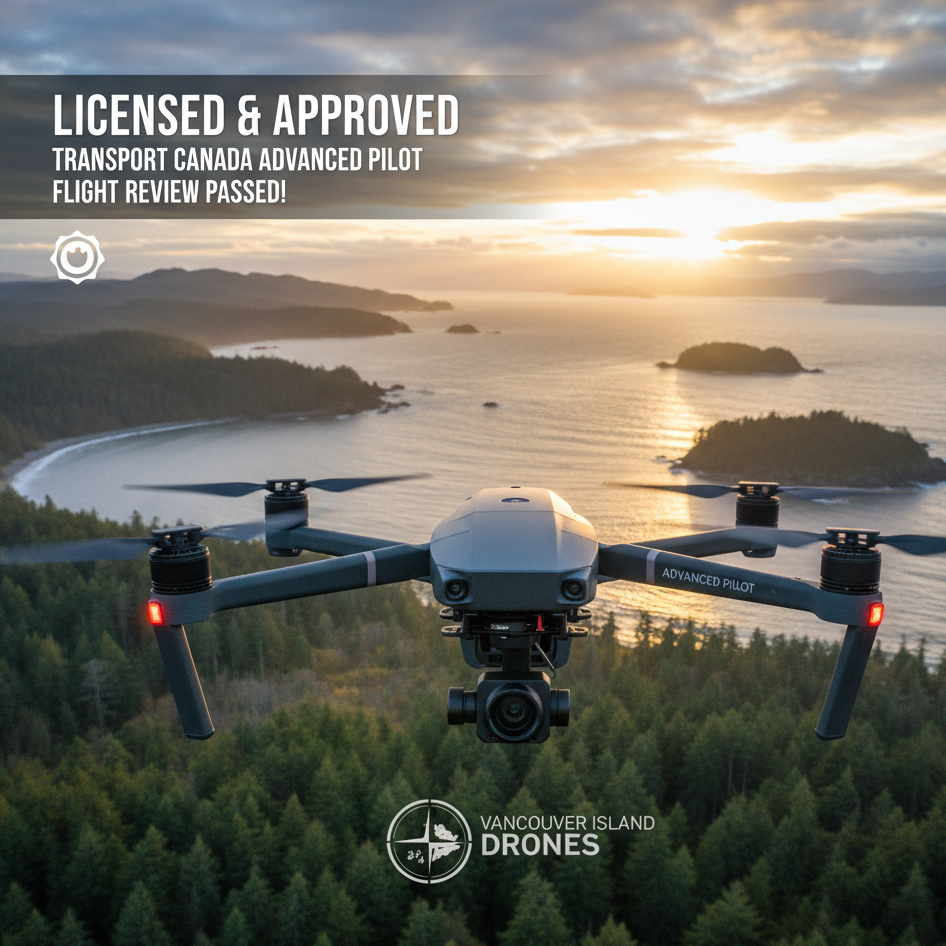
Westshore From Above: Lakes, Lagoons, and a Little Bit of Langford Pride
The Westshore has a reputation. Ask anyone from Victoria and they’ll say it’s all strip malls and traffic jams. They’re wrong. From the air, it’s one of the most beautiful corners of Vancouver Island. And yes, I’m biased — but that’s why I keep getting up at stupid o’clock with my drone batteries charged.
I’ve been flying over our lakes, stadiums, and even the famous Goldstream sign downtown Langford, because this is home. And if Vancouver Island Drones is going to be known for anything, it’s showing people the Westshore they drive past every day but don’t really see.

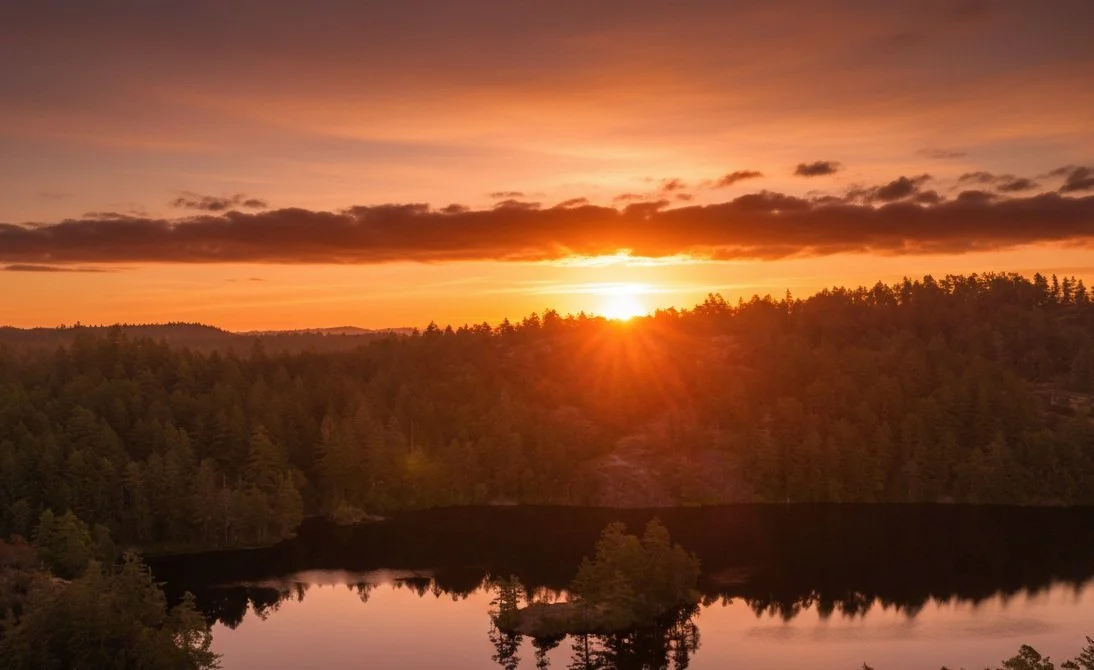
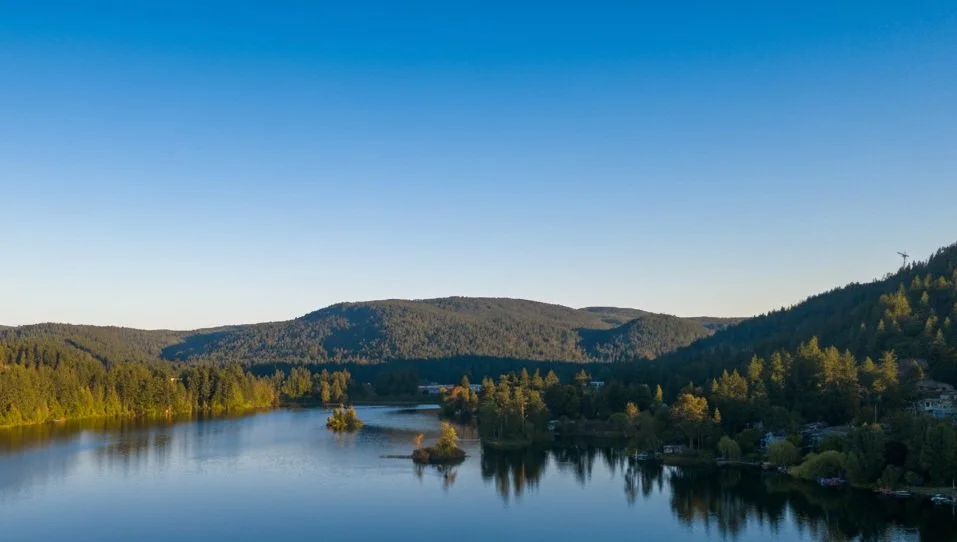
Thetis Lake
From ground level, Thetis is all about paddleboards and sunburns. From the sky, it’s a mosaic of emerald water wrapped in forest. The drone pulls back and suddenly you realize just how tucked away and perfect this place is.
Glen Lake
Smaller, but no less Westshore. You can see the docks, the houses that crowd the shoreline, and the kind of reflections you only get when the wind takes a coffee break.
Langford Lake
This one feels endless when you’re circling it from above. Families fishing, rowers carving paths across the surface, and the city building up around it. Langford Lake is the heartbeat in the middle of all this growth.
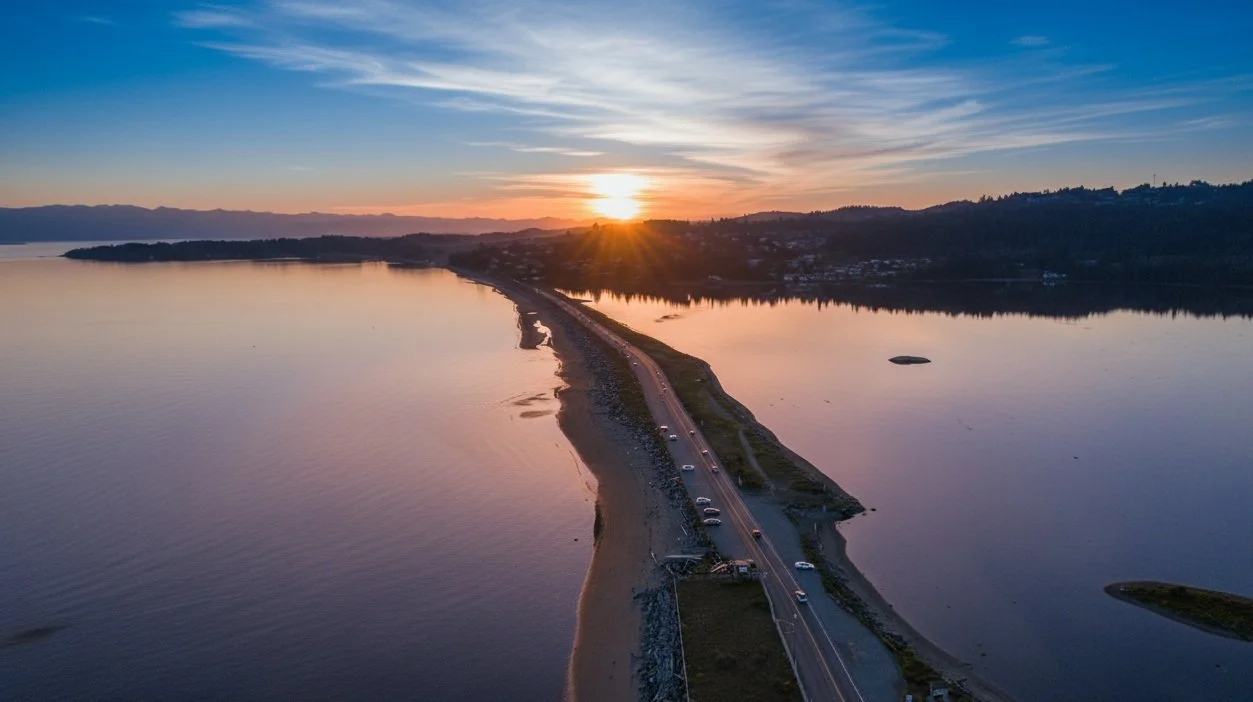
Esquimalt Lagoon
Let’s be honest — the Lagoon is our crown jewel. Sunrise here is like someone cranked the saturation dial in Photoshop, except it’s real. The driftwood, the spit, the ocean horizon… it’s why I call myself addicted. Every time I swear I’ll sleep in, the Lagoon calls me back.
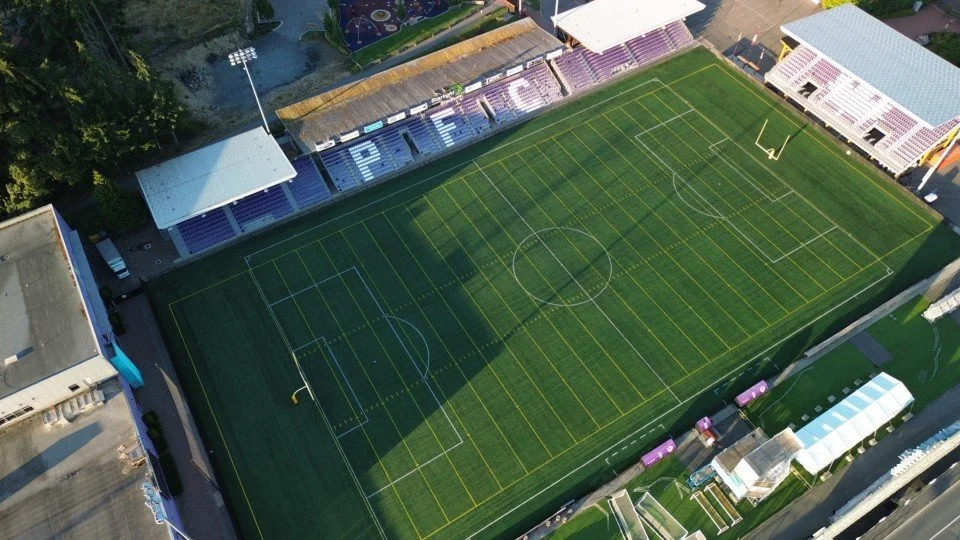
Starlight Stadium
Sure, from the bleachers you see rugby scrums and soccer goals. From the air? It looks like a jewel box under the lights, dropped in the middle of Langford. Proof that even concrete and turf can be beautiful if you climb high enough.
The Goldstream Sign
It’s kitschy. It’s iconic. It’s ours. Flying over downtown Langford, that glowing sign is a reminder that the Westshore has an identity — and I’m leaning all the way into it.
This is the long game. Vancouver Island Drones isn’t about one-off gigs or quick shots. It’s about being the drone guy for the Westshore — the one who makes people stop scrolling, recognize their own backyard, and see it from a perspective they didn’t know they needed.
So yeah, I’ll keep chasing sunrises, flying over lakes, and dropping footage of landmarks that matter to the people who live here. Because this is home, and someone’s got to show it off properly.
Related Stories
Why I Fly at Sunrise — A West Coast Morning Ritual
How early light, calm air, and quiet spaces shape safer, more intentional flights.
Teaching Kids to Fly Drones — Fun First, Safety Always
A simple, practical look at introducing young pilots to safe micro-drone flying.
Victoria — Why Everything Starts With a Conversation
How clear expectations and honest communication make local flying smoother for everyone.
Sunrise Confessions from the Lagoon
There’s a point in life where you stop being able to sleep in. You can blame kids, stress, or just getting old, but one way or another you find yourself wide awake at 5:00 a.m. staring at the ceiling, wondering if you should make coffee or just admit defeat.


For me, defeat looks like tossing the drone in the bag and heading for the Esquimalt Lagoon. Call it therapy, call it obsession — either way, when most people are fumbling for the snooze button, I’m chasing light and fighting driftwood for tripod space.
And here’s the thing: it’s worth it. Every single time.
The View Most People Sleep Through
Sunrise at the Lagoon isn’t subtle. Some mornings it’s pure fire — the whole sky bleeding orange and red over calm water, the kind of light that makes you forget your hands are freezing. Other mornings, it’s soft pastels and clouds painted like brushstrokes. Either way, it’s a reminder that the best show in town doesn’t come with a ticket price.
The drone doesn’t complain either. It just hums up into the sky, catching angles no human could manage unless they had a ladder the height of a condo tower. That’s the beauty of it: a fresh perspective on a scene that’s been there forever.
Why We Get Up Early
We joke that “We get up early in the Westshore… so you don’t have to.” But it’s true. Most people aren’t dragging themselves out of bed for this view. That’s fine — I’ll be the one running on caffeine, collecting the shots, and letting you enjoy them later at a civilized hour.
This is why Vancouver Island Drones exists. Not just to fly for the sake of flying, but to capture the places we love in ways that make people stop scrolling for a second and think, damn, I live here.
Sunrise, Old Man Style
So yeah — old man can’t sleep, dad mode engaged, drone in the air before most alarms have gone off. I’ll take it. Beats lying awake pretending I’ll fall back asleep.
Next time you see a Lagoon sunrise photo, know it’s powered by equal parts caffeine, insomnia, and stubborn love for the Westshore. And honestly? I wouldn’t have it any other way.
Related Stories
Why I Fly at Sunrise — A West Coast Morning Ritual
How early light, calm air, and quiet spaces shape safer, more intentional flights.
Teaching Kids to Fly Drones — Fun First, Safety Always
A simple, practical look at introducing young pilots to safe micro-drone flying.
Victoria — Why Everything Starts With a Conversation
How clear expectations and honest communication make local flying smoother for everyone.
Victoria BC from Above — 4 Minutes of Vancouver Island Coast & Lakes
Victoria’s not just a city you visit — it’s a view you chase. And sometimes, the only way to really see it is from the air.
We took the DJI Air 3S (with the Mini 3 as backup) out for a spin and stitched together four minutes of pure Vancouver Island: coastlines, lakes, sunsets, and skies that look like they were painted by a pyromaniac.
The Spots We Hit
This isn’t real estate fluff. It’s the places that make people pack up and move here (or never leave in the first place):
Cordova Bay — when the sky catches fire at sunset, the ocean turns into molten glass.
Esquimalt Lagoon — sand, driftwood, and coastal wildlife right on the edge of Colwood.
Thetis Lake & Glen Lake — calm, mirror-like mornings that scream “Westshore life.”
Muir Creek — rugged, untamed shoreline west of Sooke.
Telegraph Cove — a tucked-away West Coast gem.
Why We Fly
This is still a passion project — a hobby that’s trying its best to become a business. But the beauty of Vancouver Island makes it hard not to keep flying. Whether it’s construction updates, hospitality promos, or content for local businesses, drones give you a perspective you just can’t get any other way.
Watch the Film
The full 4-minute cut is up on YouTube:
👉 Victoria BC Drone Tour | Vancouver Island Coast & Lakes in 4K

Pour a coffee, hit play, and let Vancouver Island remind you why the West Coast is the best coast.
Related Stories
Why I Fly at Sunrise — A West Coast Morning Ritual
How early light, calm air, and quiet spaces shape safer, more intentional flights.
Teaching Kids to Fly Drones — Fun First, Safety Always
A simple, practical look at introducing young pilots to safe micro-drone flying.
Victoria — Why Everything Starts With a Conversation
How clear expectations and honest communication make local flying smoother for everyone.